Place
Introduction to Place
Introduction to place
Place in the marketing mix refers to where customers purchase a business's products and the distribution channels used to move the product from producer to consumer
In a competitive environment, location and distribution decisions can give a company a competitive advantage
Businesses could locate themselves in areas with high foot traffic to achieve high sales volumes
They may use online channels to reach customers who prefer to shop from the comfort of their own home
Changing consumer needs can impact the way businesses distribute their products
E-commerce makes it easier for consumers to shop online and have products delivered to their doorstep
Many businesses have therefore invested in their online presence, offering convenience and fast delivery to meet customer needs
Distribution channels
Distribution channels
Distribution channels refer to the intermediaries through which products move from the business to the end customer
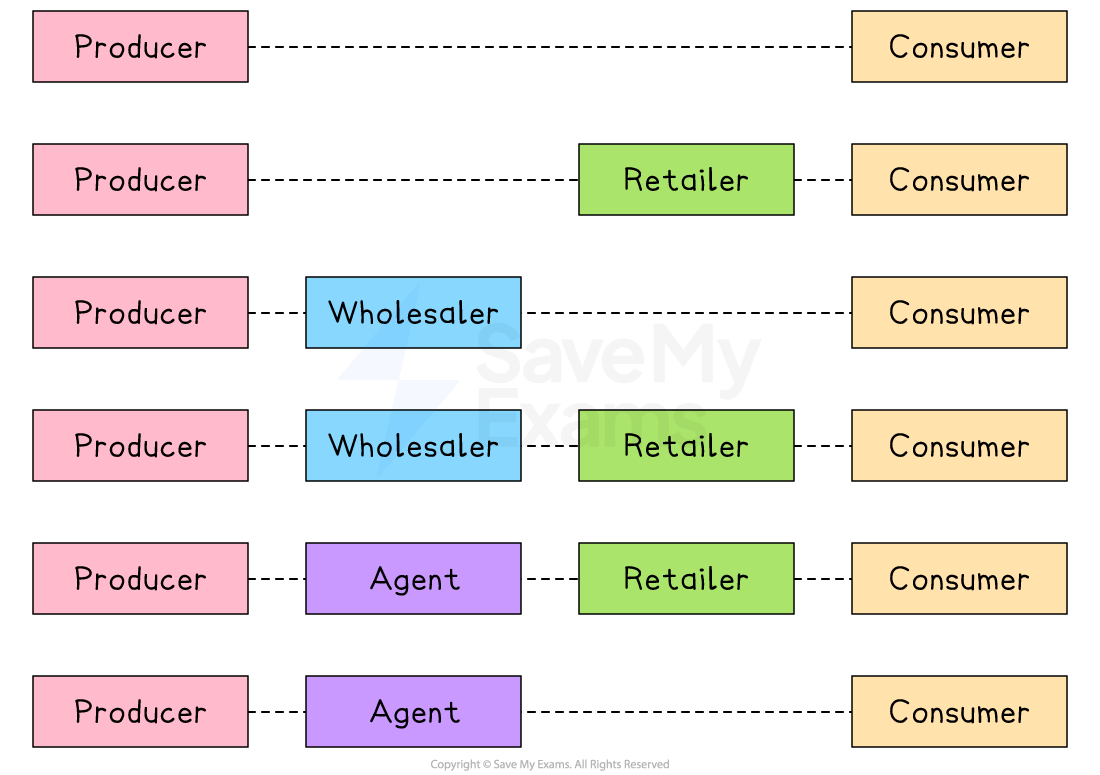
1. Direct to customers
The business sells its products straight to the customer without using any intermediaries
For example, a bakery sells bread directly to customers at a local market or in its own store
Advantages | Disadvantages |
|---|---|
|
|
Through retailers
The business sells its products to a retailer, who then sells them to final customers.
For example, a clothing brand like Levi’s sells its jeans through department stores like Farmers in New Zealand
Advantages | Disadvantages |
|---|---|
|
|
Through wholesalers
The business sells large quantities to a wholesaler, who then sells smaller amounts to retailers or customers
For example, soft drinks businesses like PepsiCo sell to wholesalers who supply small convenience stores
Advantages | Disadvantages |
|---|---|
|
|
Through agents
An agent acts as a specialist middleman who helps sell the product, often in another country or market, earning a commission
Agents can negotiate with retailers or individual customers
For example, a wine producer in South Africa using an export agent to sell wines in Europe
Advantages | Disadvantages |
|---|---|
|
|
Recommending a suitable distribution channel
Recommending a suitable distribution channel
The choice of distribution channel chosen by a business depends on a variety of factors
The following questions are worth considering when establishing a distribution channel
Do consumers want to speak to a salesperson?
Will customers want to handle the product before they make a purchase?
Would they prefer to purchase it online?
Does the product require special handling, such as protective packaging or quick delivery?

Factors affecting the choice of channel
1. Type of product
If sold to producers of other goods, distribution is likely to be direct or via a specialist wholesaler
For example, JCB sells excavators directly to construction companies
Specialist wholesalers such as France's Bricoman sell consumable building supplies such as nuts, bolts and cement to builders
2. Frequency of purchase
If the product is bought on a daily basis, retail stores provide convenience for consumers
For example, Milka chocolate is sold in most EU-based supermarkets
3. The price of the product
If the products is an expensive luxury good, it would be best sold through a few specialist outlets
For example, Rolex watches are sold in high-end jewellery stores
4. The durability of the product
Perishable product like fruit and vegetables are distributed through retailers, sometimes via wholesalers, to be sold quickly
5. Proximity of customers
If customers are located over the world, e-commerce is likely to be a suitable distribution channel
6. Competitors distribution channels
Products need to be sold where competitors are selling so that a business can compete effectively
For example, Nestlé cereals are sold alongside Kelloggs cereals in a wide range of retail outlets
7. Technical specifications
If technical information needs to be passed to the customer, direct selling or a retailer is usually preferred
For example, Apple Store staff provide focused advice to customers purchasing its range of phones, computers and entertainment devices