Production processes: Inventory
Why businesses hold inventory
Why do businesses hold inventory?
Businesses hold inventories to support smooth operations and avoid disruptions
Main types of inventories
Raw materials | Components |
|---|---|
|
|
Work-in-progress | Finished goods |
|
|
Reasons for holding inventories include:
To prevent stockouts and lost sales
To take advantage of bulk purchasing discounts
To buffer against supply chain delays
To ensure continuous production even when delivery of materials is uncertain
However, holding too much inventory can increase storage costs and risk of damage or obsolescence, which is why inventory levels must be carefully managed
Factors affecting how much inventory businesses hold
Factors affecting how much inventory a business holds
Choosing the right level of inventory is important to avoid waste, reduce costs and ensure smooth operations
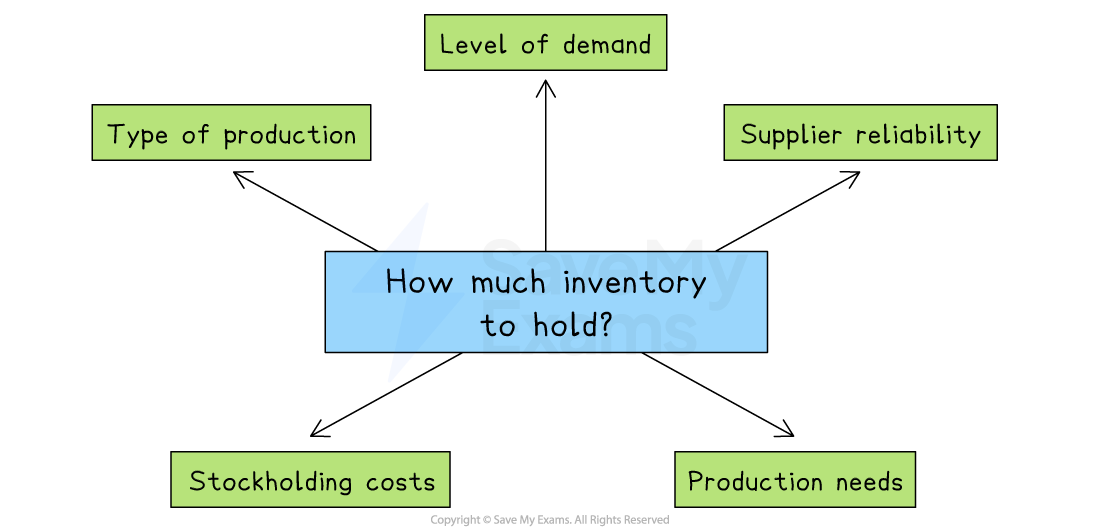
Type of product
Perishable goods like fresh food must be kept in smaller amounts to avoid spoilage
Durable goods such as electronics can be stored for longer
Nature of demand
Businesses with fast-selling products need more inventory to avoid running out, especially during busy periods
For example, a toy shop holds extra stock of popular toys before Christmas
On the other hand, low-selling items need less stock to prevent wastage
Supplier reliability
If suppliers are unreliable or located far away, businesses may keep more stock as a backup in case of delays or poor-quality deliveries
For example, a car manufacturer may keep extra spare parts if overseas suppliers take weeks to deliver
Cost of holding inventory
High storage costs may encourage businesses to reduce the amount of inventory they keep
If warehousing is cheap or in-house, businesses might hold more stock
Production needs
Manufacturers need enough raw materials or components to avoid stopping production
If production is continuous, a steady supply of inputs is essential
For example, a bread factory must always have enough flour to avoid delays on the production line