The Main Production Methods
Different Types of Production Processes
Methods of production
Businesses can organise their production processes in a variety of ways
The method of production used by a business will depend upon a number of factors
The level of output required to be produced
The nature of the product
Whether the product is standardised or customised
The level of automation used in production
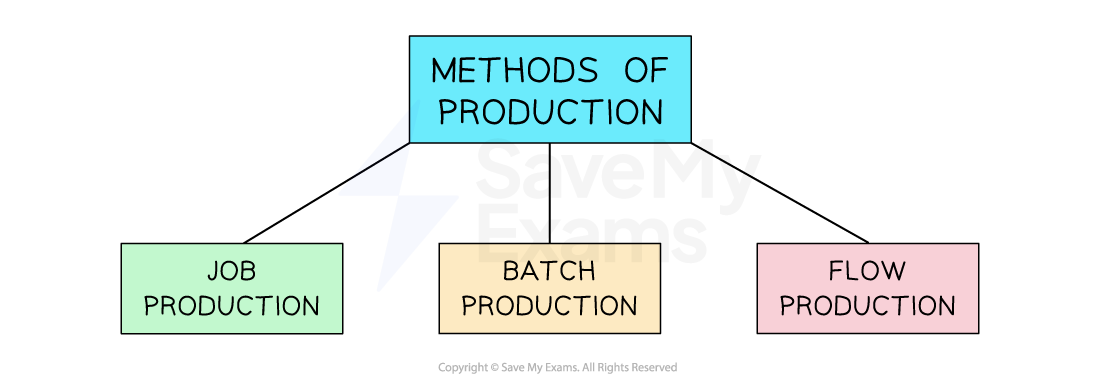
Explaining the methods of production
1. Job Production
Manufacturers produce one product at a time as ordered by the customer
Advantages:
High quality product
Motivated and highly skilled workers
Customised products can be produced
Disadvantages:
Production is slow
Labour costs are high
2. Flow production
Continuous manufacturing of standardised products, usually on a production line
Advantages:
Low unit costs due to economies of scale
Rapid production
Usually highly automated (capital intensive)
Disadvantages:
Customisation is difficult
Capital equipment can be expensive to purchase
3. Batch production
Groups of the same product are produced as a batch, e.g., 1000 Blueberry muffins
Advantages:
Workers can specialise
Production can take place as the previous 'batch' starts running out
Disadvantages:
Requires careful coordination to avoid shortages
Money is tied up in stock
Completed products need to be stored
Recommending an Appropriate Production Method
Recommending an appropriate method of production
Small scale businesses often use job or batch production as they lack the resources for flow production
Large scale businesses are more likely to use flow production to meet high demand for their products
Several factors may influence a businesses decision as to which type of production methods is used
Factors affecting the choice of production method
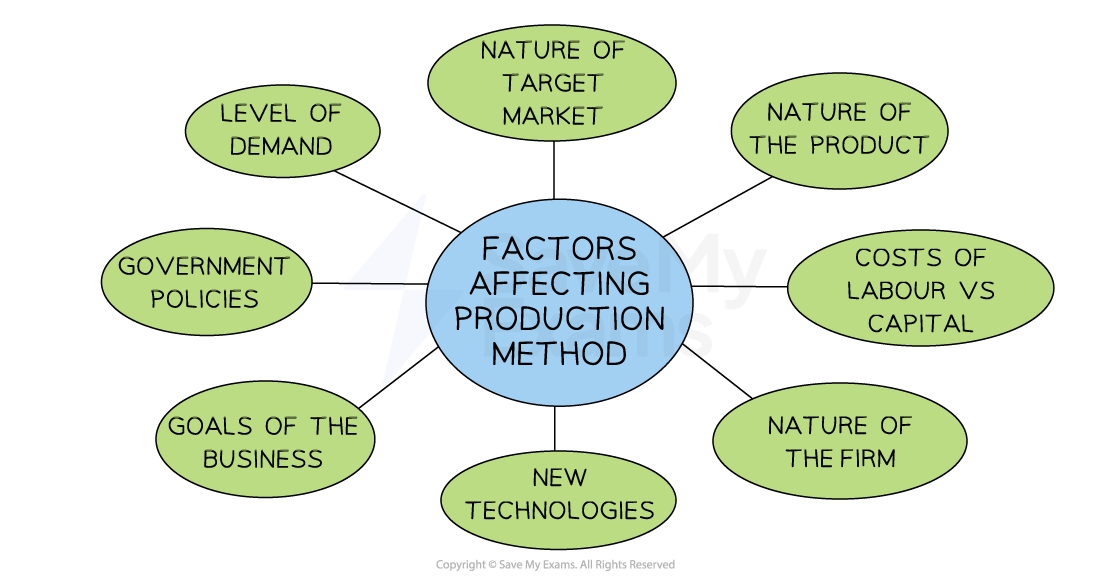
Explanation of factors
The level of demand
High demand may justify investment in flow production
The nature of the target market
Price-sensitive markets may require high volume, standardised products
High quality customised products require job production
The nature of the product
It may only be possible to produce certain products using one method, e.g. sports stadiums require job production
The comparative costs of labour and capital
Large firms minimise labour costs by investing in automation
Cheap labour allows for labour-intensive production methods, which generates the use of job or batch production
The nature of the firm itself
Small firms lack funds to invest in flow production
New technologies
As technologies become cheaper, smaller firms can afford equipment previously inaccessible to them and increase their level of flow production
The goals of the business
Firms seeking to maximise market growth and profitability may invest in flow production
Small firms may use job production methods to create unique selling points e.g. ‘hand-made’
Government policies
The government may stimulate economic growth by offering subsidies and tax breaks for investment in technology