Methods of Sustainable Production
Introduction to sustainable production
Introduction to sustainable production
Sustainable production occurs when a business produces goods and services in ways that do not harm the environment, society or future generations
It focuses on meeting current needs without using up natural resources or causing long-term damage
What sustainable production may involve
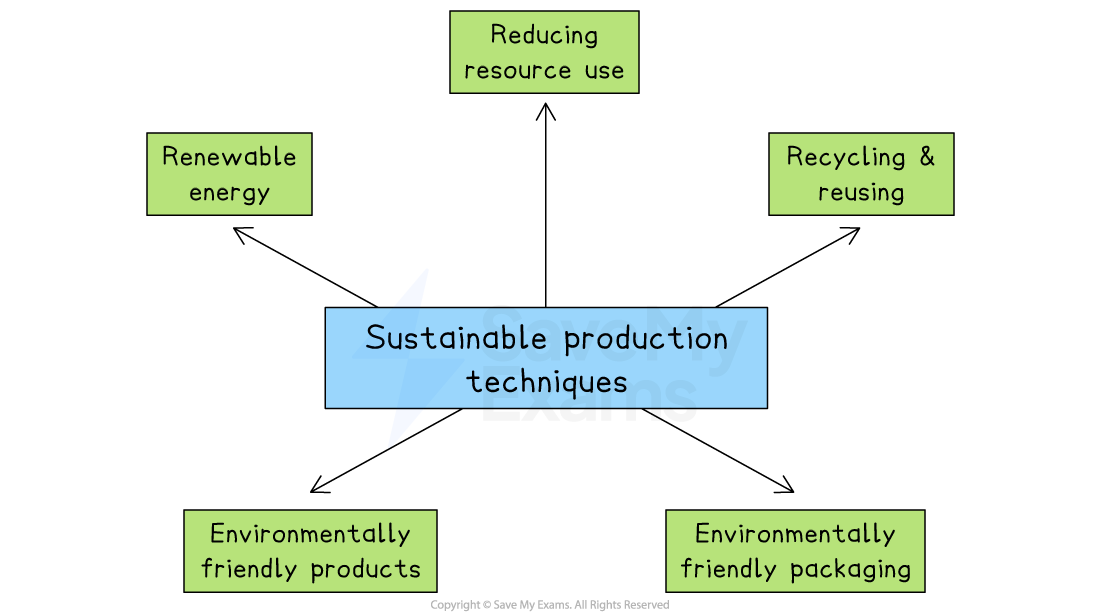
These practices help protect the environment, improve a business’s reputation and may also reduce costs in the long term
Renewable energy
Renewable energy
Renewable energy comes from natural sources that will not run out, like the sun, wind, water and geothermal heat
These sources are constantly being renewed by nature
How businesses use renewable energy
Solar panels on buildings to generate electricity
Wind turbines to produce power, especially for factories or large offices
Hydroelectric power, if the business is located near rivers or dams
Geothermal heating for buildings in suitable areas
Buying green energy from suppliers who use renewable sources
Reducing resource use
Reducing resource use
Reducing resource use means using fewer materials, water and energy when making goods or providing services
It helps businesses cut waste, lower costs and protect the environment
Businesses can reduce resource use in the following ways:
Designing products that use fewer materials
Reusing materials in production instead of using new ones
Improving efficiency, like using machines that need less electricity
Reducing packaging, or switching to recycled or recyclable packaging
Saving water, for example by using water-efficient systems
Reusing and recycling
Reusing and recycling
Reusing means using items or materials again instead of throwing them away
Recycling is turning waste materials (like paper, plastic or metal) into new products
Businesses reuse and recycle in the following ways:
Reuse packaging, containers, or leftover materials in production
Recycle waste, like paper, plastic, glass, or metal, either in-house or through recycling companies
Encourage customers to return used products (e.g. refillable bottles or old electronics)
Buy recycled materials to make new products
Developing environmentally friendly products
Developing environmentally friendly products
Environmentally friendly products are designed to have less harm on the planet
They use natural or recycled materials
They are energy efficient
They create less waste or pollution
They are biodegradable or reusable
These products help reduce environmental impact during use and after disposal
Businesses develop environmentally friendly products in the following ways:
Use sustainable materials, like organic cotton or recycled plastic
Design products that last longer or are easy to repair
Replace harmful chemicals with natural alternatives
Offer refillable or reusable versions of existing products
Using environmentally friendly packaging
Using environmentally friendly packaging
Environmentally friendly packaging is made from materials that are recycled, recyclable, biodegradable, compostable or reusable
It is designed to reduce waste and lower harm to the environment
Businesses develop environmentally friendly packaging in the following ways:
Use paper or cardboard instead of plastic
Choose biodegradable or compostable bags
Offer refillable packaging or reusable containers
Use minimal packaging to avoid waste
Print with eco-friendly inks or labels
Advantages and disadvantages of sustainable production
Advantages and disadvantages of sustainable production
In 2024, 91% of new renewable energy projects were cheaper than fossil fuels
Solar was 41% cheaper and onshore wind 53% cheaper on average
These savings helped global businesses save up to $467 billion in fuel costs
However, sustainable businesses often have a lot of extra work, like checking records and collecting data to make sure they pass regular audits
Evaluation of sustainable production
Advantages | Disadvantages |
|---|---|
|
|
Greenwashing
Greenwashing is when a business pretends to be environmentally friendly, but its actions do not match what it claims
For example, a company might advertise its products as eco-friendly when, in reality, they are not
It is a way for businesses to attract customers who care about the environment, without making real changes to how they work
Problems of greenwashing
Loss of trust
If customers find out the business lied, they may stop buying from it
Eco-conscious customers may share negative reviews or avoid the brand entirely
It can lead to bad publicity and complaints
Legal trouble
In some countries, making false environmental claims can lead to fines or court action