Quality Control & Assurance
The Importance of Quality
The importance of quality
Quality considers the characteristics and features of a product that satisfy the needs of customers
Businesses need to maintain a level of quality for several reasons
Attract and retain loyal customers
Build the reputation of the business or brand
Reduce wastage and returns from unsatisfied customers
The quality of a businesses products can provide a competitive advantage
High quality and minimal defects lowers business costs allowing lower selling prices to better compete with rivals
High quality can be used in promotional activity and provide a unique selling point for businesses in competitive markets
Successfully developing a USP for quality can improve business reputation and ease expansion into new markets
If quality is not maintained then businesses may be at risk of
Losing their competitive advantage and customers to other brands who offer better quality goods/services
Experiencing higher costs due to having to replace faulty or defected goods
Gaining a poor reputation as customers spread poor reviews about the business to others
Customer perceptions of quality are influenced by numerous factors
Factors that influence quality perception
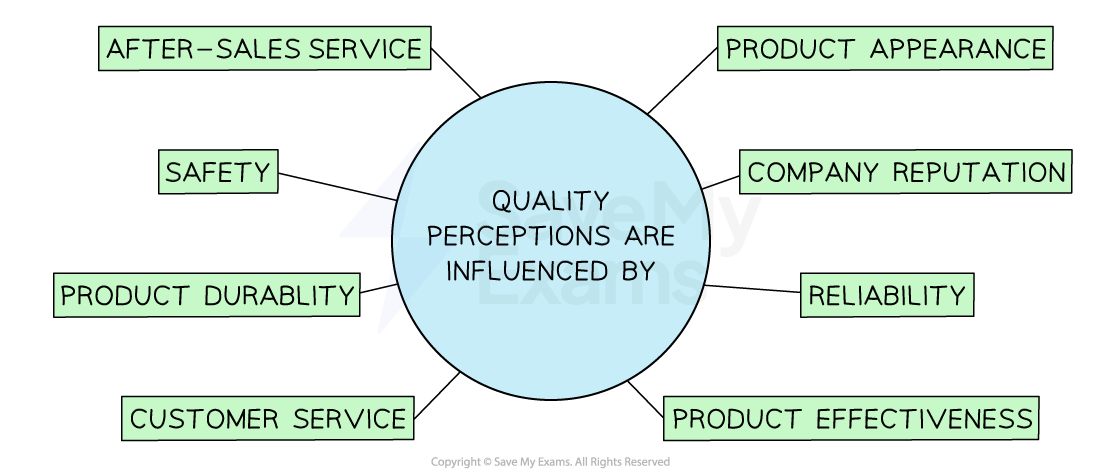
Customers may consider products or services to be of good quality if they
Look good and are sold by a reputable business or brand
Are reliable and durable
Are safe and fit for purpose
Receive good customer service, including after-sales service
In some countries laws protect consumers so businesses need to ensure that the products it sells are free of faults or defects to avoid harming customers or their reputation
Quality Control
Quality control
Quality control is a traditional method of checking quality at the end of the production process using quality inspectors to find faults
It is not possible to achieve perfection in every production process
E.g., There will always be some variation in terms of materials used, production skills applied, reliability of the finished product
Evaluating the use of quality control
Benefits | Drawbacks |
|---|---|
|
|
Quality Assurance
Quality assurance
Quality assurance involves employees checking quality standards throughout the production process
It aims to achieve quality by organising every process to get the product 'right first time' and prevent mistakes happening
There is an emphasis on 'self-checking' rather than checking by inspectors at the end of the process
Total Quality Management (TQM) is a specific approach to quality assurance that aims to develop a quality culture throughout the firm
TQM is the continuous improvement of products and processes by focusing on quality at every stage of production
It tries to get it right first time and achieve ‘zero defects’
Evaluating the use of quality assurance
Benefits | Drawbacks |
|---|---|
|
|