The Meaning of Production
Introduction to Production
An introduction to production
Production is the transformation of resources (e.g. raw materials, components and labour) into finished goods or services
Goods are physical products, such as bicycles and T-shirts
Services are non-physical items such as hairdressing, tourism and manicures
The purpose of production
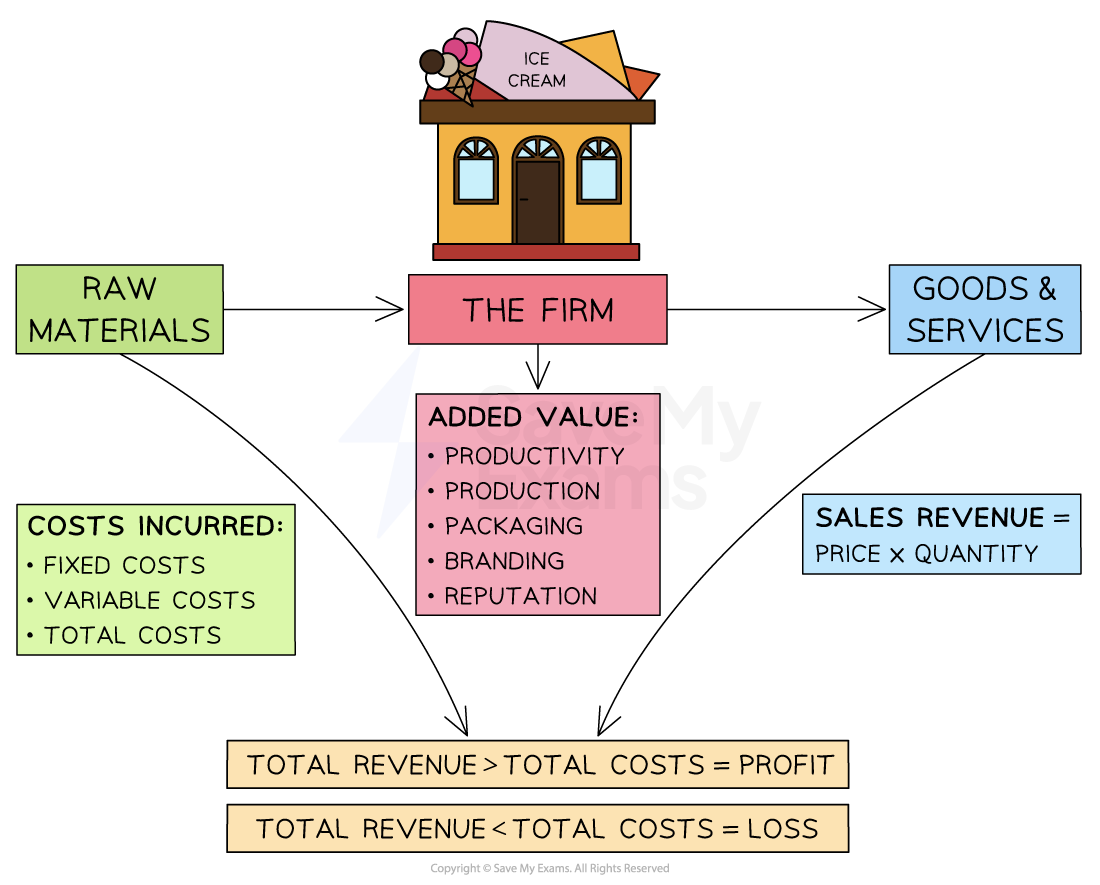
The process of transforming inputs into outputs (goods and services) adds value to the raw materials
Competitive businesses combine these inputs of resources efficiently, making the most of the resources so as to minimise costs and generate a profit
Operations management focuses on designing, controlling and improving the processes used in the production of goods and services
It involves overseeing the entire production process, from acquiring raw materials to delivering the final product/service to customers
Its goal is to ensure that the production process is efficient, cost-effective and meets quality standards
The Difference Between Production & Productivity
The difference between production and productivity
The terms production and productivity are fundamentally different
Production is the act of adding value to the factors of production to create goods/services e.g. using tomatoes & basil to create a soup
It is the process of converting the factors of production into goods/services
It is a measure of output e.g. 3 cans of soup
Productivity is a measure of efficiency that calculates the amount of outputs produced per unit of input
It calculates how efficiently resources are being used in the creation of goods/services and aids comparison of performance e.g. after training, workers proved to be 27% more efficient in their productivity
Labour productivity is calculated using the formula
Improving productivity
Productivity can often be improved so as to reduce costs
This can be achieved by:
Increasing output using the same level of inputs
Maintain the level of output but using fewer inputs
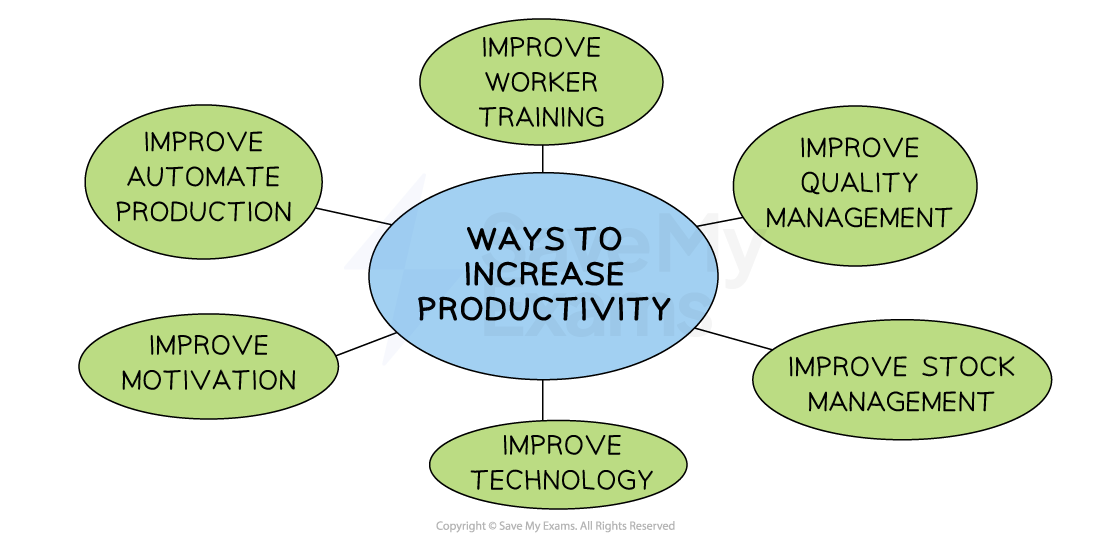
When costs decrease, a business can either pass on savings to consumers in the form of lower prices or maintain the selling prices and enjoy higher profit margins
Businesses that increase their level of productivity are likely to be more competitive and are more likely to be successful in the long term
The Benefits of Increased Efficiency
The benefits of increased efficiency
Efficiency refers to the ability of a business to use its production resources as cost-effectively as possible
Efficiency is often measured in terms of the average cost per unit
The average cost per unit is calculated using the formula
Maximum efficiency is achieved when the cost per unit is at its lowest
Businesses that increase their level of productivity (e.g of workers or capital equipment) are likely to be more competitive
The benefits of improved efficiency
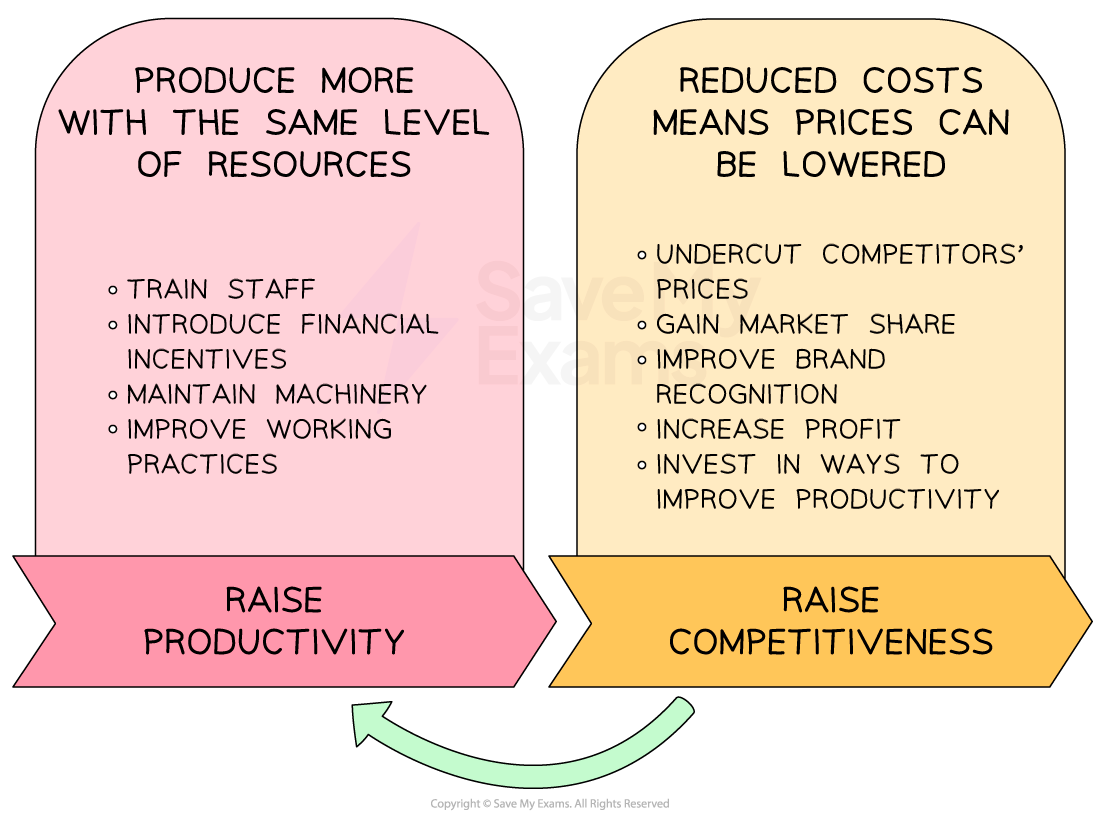
Businesses that are competitive usually generate more profit
This provides the financial resources to continue investing in improvements to their productivity
Why Businesses Hold Inventories
Why businesses hold inventories
Businesses hold inventories (also called stock) to support smooth operations and avoid disruptions
Types of inventories include:
Raw materials—to keep production running without delays
Work-in-progress—partially completed goods between stages of production
Finished goods—ready to be sold to meet customer demand promptly
Reasons for holding inventories include:
To prevent stockouts and lost sales
To take advantage of bulk purchasing discounts
To buffer against supply chain delays
To ensure continuous production even when delivery of materials is uncertain
However, holding too much inventory can increase storage costs and risk of damage or obsolescence, which is why inventory levels must be carefully managed