Different Location Needs for Manufacturing & Service Businesses
Location Decisions
Location decisions
Location is the site from which a business decides to operate
A business may look for a new location if it is setting up for the first time or the existing location no longer meets its needs
A new site may become available that is more attractive to the business, e.g., it has a larger staff car park or room for further expansion
The business may look to locate sites in their home country or abroad
Large companies such as Apple or Nike have chosen to locate their factories where labour and material costs are low
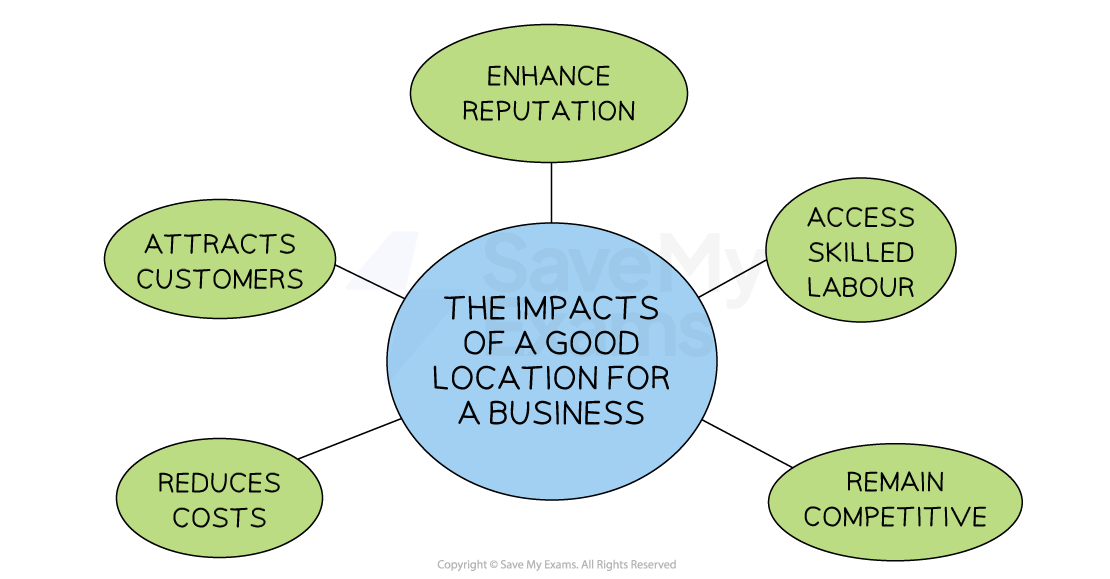
Choosing a good location can generate positive impacts for the business
The impact of a good location
Many businesses have failed due to having established themselves in a poor location
A good location can reduce costs, whereas a poor location will increase them
A good location provides excellent access to sufficient customers, whereas a poor location limits customer interactions
A good location provides access to a skilled workforce, whereas a poor location limits access to the required human skills
Factors Affecting the Location of a Manufacturing Business
Factors affecting the location of a manufacturing business
The ideal business location depends upon the type of business and what it produces/sells
Manufacturing business are likely to have different location priorities than service sector businesses
B2B businesses are unlikely to need to locate close to passing trade, whilst B2C businesses may choose a location with high footfall
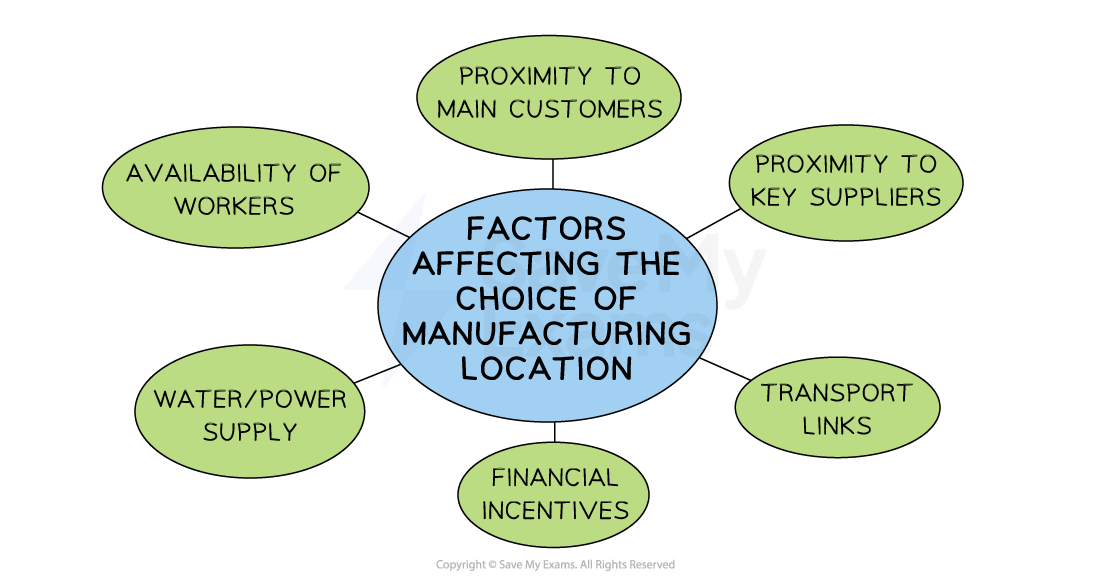
Explaining the factors
Proximity to key supplies
Businesses that need to process fresh raw materials quickly may be better located close to their source, e.g. seafood processing
Those that adopt lean production techniques may locate close to key suppliers to reduce lead times
Proximity to main customers
Businesses selling perishable goods may locate close to the target market to ensure products are at their peak
Manufacturers of heavy or difficult-to-transport goods may locate close to their end market to reduce transportation costs
Availability of workers
Businesses that require skilled labour choose locations where workers with those skills are readily available
Hi-tech businesses may locate in areas where competitors operate to take advantage of the concentration of skilled workers
Research-focused businesses may locate close to universities
Financial incentives
Governments sometimes provide grants or low-cost loans to firms that set up in areas with high-unemployment
Low business rates may encourage manufacturers to expand in particular regions
Transport
Good transport links provided by major roads and efficient rail links are particularly important for businesses that require an effective logistics network
Power/water supply
A reliable and steady supply of water and power are required by factories
Factors Affecting the Location of a Service Business
Factors affecting the location of a service business
Businesses in the service sector also consider further factors when determining a suitable location
Proximity to customers is very important for retail businesses
Premises must be accessible and convenient so a location with a car park or close to transport links is likely to be a key influence
Locating in areas with high footfall, such as on a high street or in a shopping mall, is a popular choice for retailers
In some cases, a location may be chosen to take advantage of a shared customer base or a particular reputation
Examples include bookshops on London's Charing Cross Road and luxury fashion brands on New York's Fifth Avenue
Climate and geographical factors can be a key factor for some specialist service providers
E.g. Businesses offering ski instruction will locate in mountainous areas with high annual snowfall
Services businesses that do not rely on passing trade may locate in out-of-town premises
Rent and business rates tend to be lower
Incentives for job creation such as grants may be available from local authorities
In addition, businesses are likely to avoid locating in areas with high levels of anti-social behaviour and crime, as this could impact insurance costs