StudyDeck

Economies of Scale

Exam code: 7115
Written by: Ashika|Reviewed by: Caroline Carroll|Updated 2 July 2026

Economies of Scale

Economies of Scale

  • As a business grows, it is able to increases its scale of output which generates efficiencies that lower its average costs (AC) of production

    • These efficiencies are called economies of scale

    • Economies of scale help large firms lower their costs of production beyond what small firms are able to achieve

  • Economies of scale can result in lower average (or unit) costs, not lower total costs

    • The total costs will increase, but at a decreasing rate per unit

Explaining economies of scale
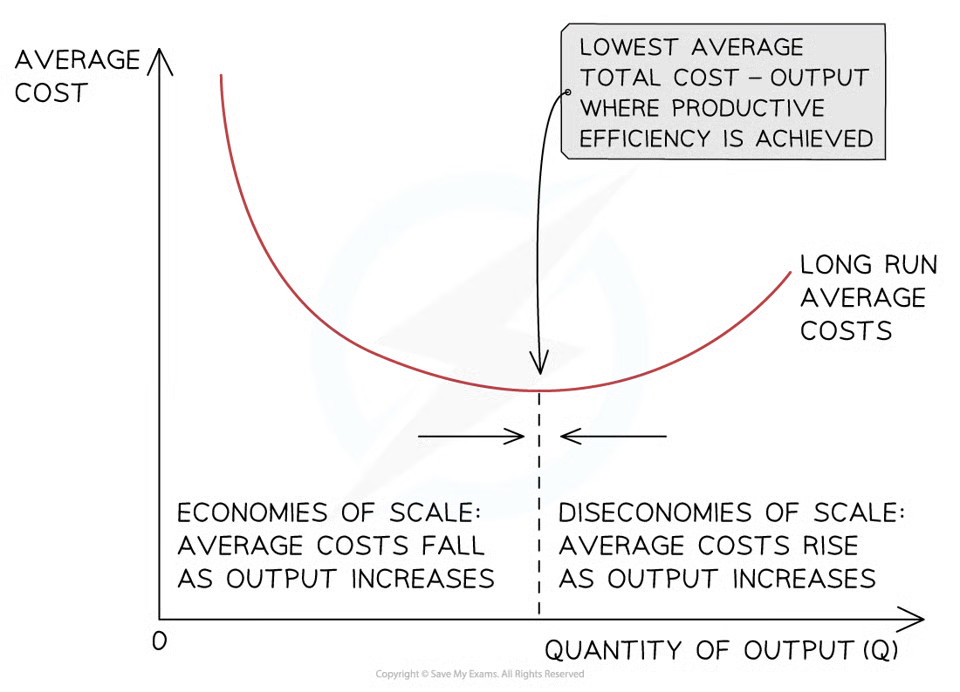
Economies of scale lower average costs as the scale of output increases

Diagram analysis

  • With relatively low levels of output, the firms average costs are high

  • As the firm increases its output, it begins to benefit from economies of scale which lower the average cost per unit

  • The business will reach a level of output at which costs are minimised

  • Beyond this point, diseconomies of scale will occur and the average cost will start to rise again

Different types of economies of scale

  • Economies of scale are generated by several internal factors, some of which the business has control over

  • Businesses will attempt to benefit from as many of these economies as possible in order to lower their costs and increase their profit

The different economies of scale

Type of economy of scale

Explanation

Purchasing economy

  • Occurs when large firms buy raw materials in greater volumes and receive a bulk purchase discount, which lowers the average cost

    • This provides a cost advantage over smaller businesses

Managerial economy

  • Occurs when large firms can employ specialist managers who are more efficient at certain tasks, and this efficiency lowers the average cost. Managers in small firms often have to fulfil multiple roles and are less specialised 

    • They may attract the best talent from other businesses increasing competitive advantage

Marketing economy

  • Occurs when large firms spread the cost of advertising over a large number of sales and this reduces the average costs 

    • They can also reuse marketing materials in different geographic regions which further lowers the average costs

Financial economy

  • Banks are more willing to lend to large businesses as they present less of a risk than small businesses 

    • They will be charged a lower rate of interest on their borrowings, reducing average costs

Technical economy

  • Occurs as a firm is able to use its machinery at a higher level of capacity due to the increased output

    • This spreads the cost of the machinery over more units and lowers the average cost