Economies & Diseconomies of Scale
Economies of scale
Economies of scale
As a business grows, it is able to increases its scale of output which generates efficiencies that lower its average costs (AC) of production
These efficiencies are called economies of scale
Economies of scale help large firms lower their costs of production beyond what small firms are able to achieve
Economies of scale can result in lower average (or unit) costs, not lower total costs
The total costs will increase, but at a decreasing rate per unit
Explaining economies of scale
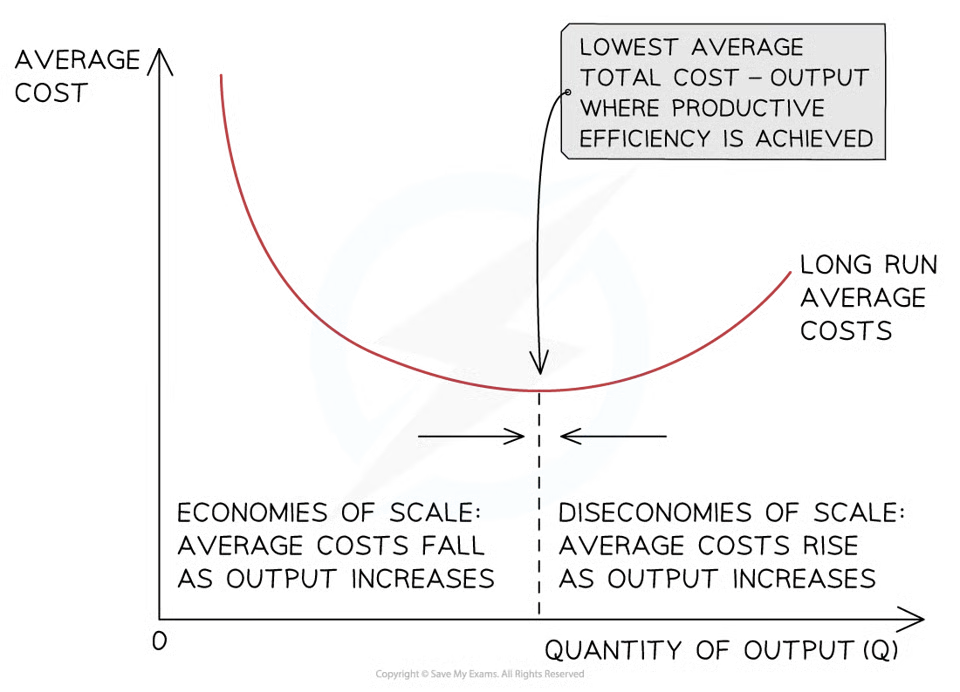
With relatively low levels of output, the firm's average costs are high
As the firm increases its output, it begins to benefit from economies of scale, which lower the average cost per unit
The business will reach a level of output at which costs are minimised
This point is found at the dotted line in the image above
Types of economies of scale
Economies of scale are generated by several internal factors, some of which the business has control over
Type of economy of scale | Explanation |
|---|---|
Purchasing economy |
|
Managerial economy |
|
Marketing economy |
|
Financial economy |
|
Technical economy |
|
Diseconomies of scale
Diseconomies of scale
A diseconomy of scale occurs when an increase in the scale of output results in a higher cost per unit
As a firm continues increasing its scale of output, it will reach a point where its average costs (AC) will start to increase
Explaining diseconomies of scale
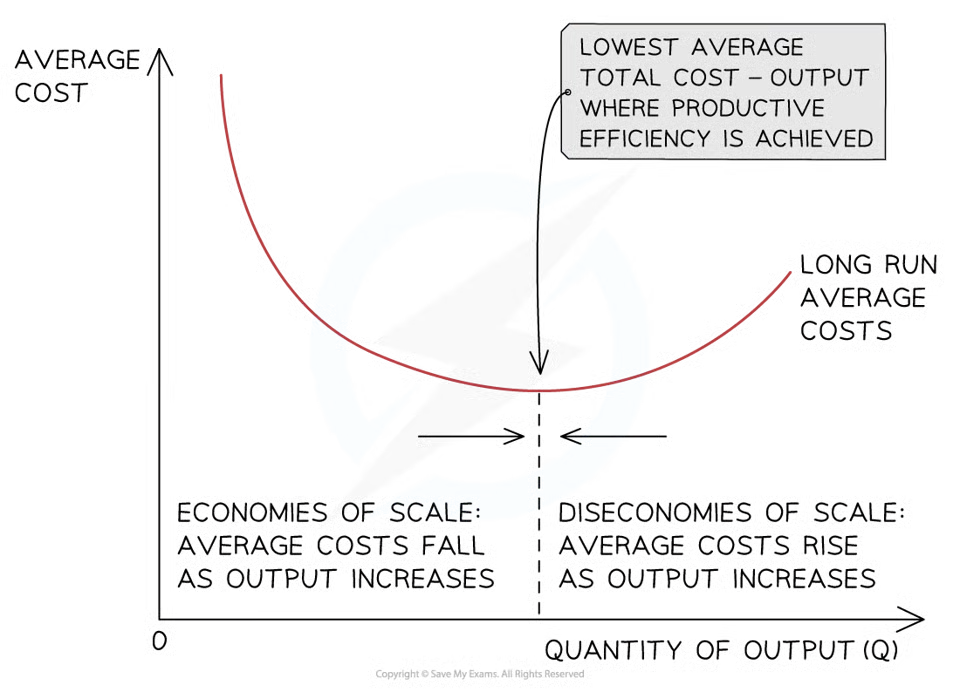
At some level of output, a firm will not be able to reduce costs any further. This point is called productive efficiency
Beyond this level of output, the average cost will begin to rise as a result of diseconomies of scale
This indicates that there is an optimal level of output that exists when the state of technology and capital (machinery) is fixed
Types of diseconomies of scale
Diseconomies of scale highlight that it is possible for a business to become so large that it becomes less and less efficient
A business experiencing diseconomies of scale may reconsider its organisational structure to improve communication and coordination problems
Many very large businesses often break themselves up into autonomous smaller units, which can communicate more effectively
The causes of diseconomies of scale
Type of diseconomy of scale | Explanation |
|---|---|
Poor communication |
|
Weak coordination |
|
Lack of commitment from employees |
|