Measurement
Measuring Length & Volumevideo
Measuring Length & Volume
Rulers can be used to measure small distances of a few centimetres (cm).
They are able to measure to the nearest millimetre (mm)
Measuring with a ruler
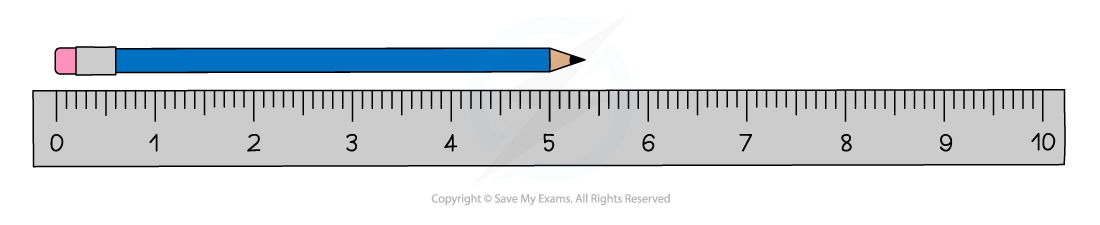
A ruler can measure small distances to the nearest mm
When measuring larger distances (of a few metres) a tape measure is more appropriate or, when measuring even larger distances, a trundle wheel
A trundle wheel
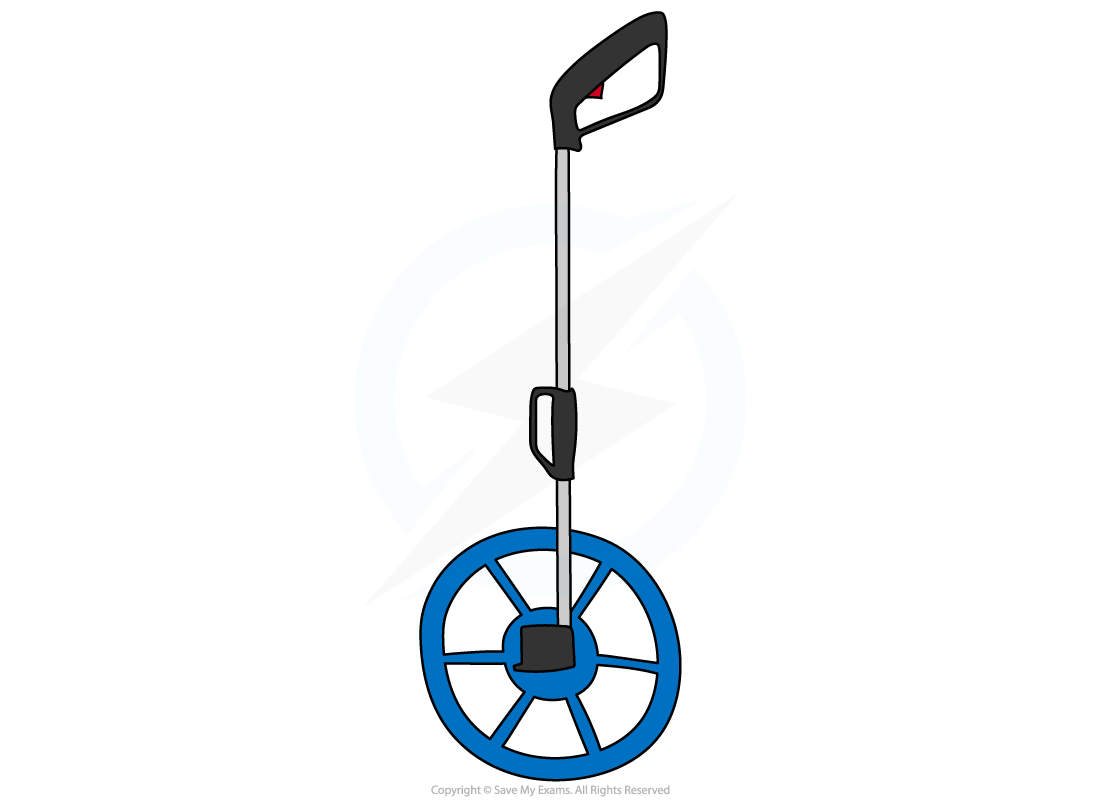
Trundle wheels can be used to measure large distances
Measuring cylinders can be used to measure the volume of liquids
By measuring the change in volume, a measuring cylinder can also be used to find the volume of an irregular shape
Measuring cylinders to measure volumes
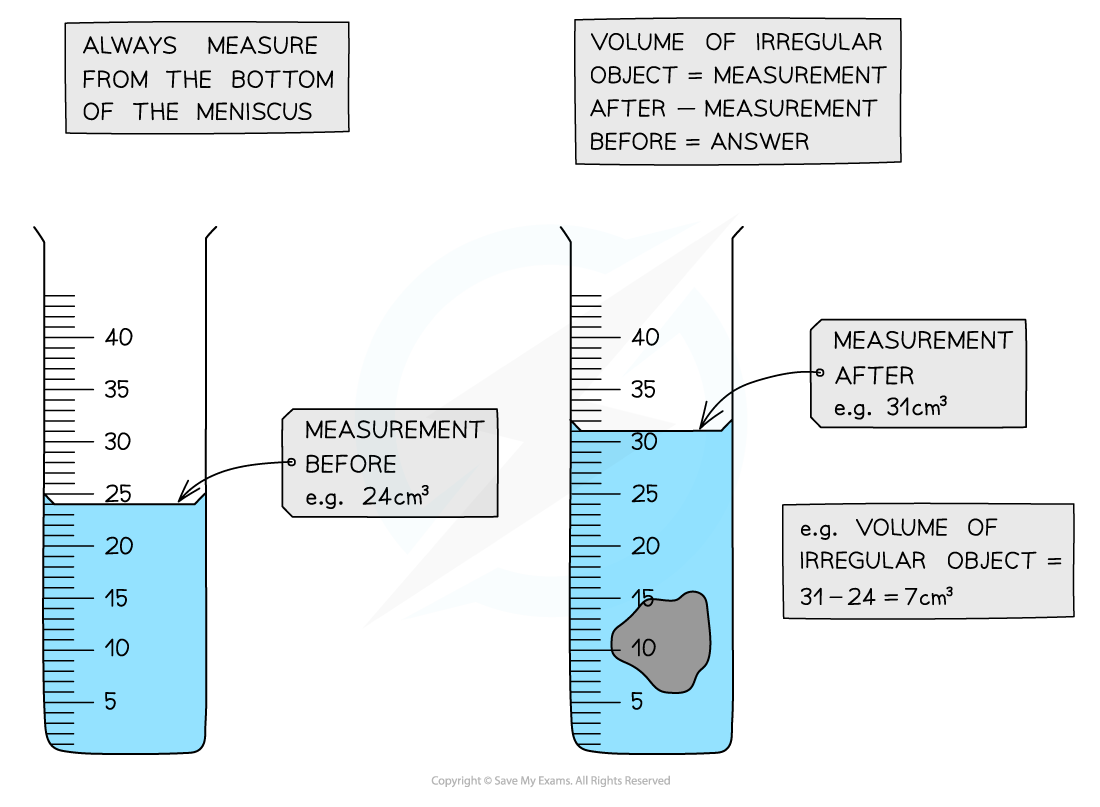
Measuring cylinders can be used to determine the volume of a liquid or an irregularly shaped solid
Measuring Time
Measuring Time
Stop-clocks and stopwatches can be used to measure time intervals
An important factor when measuring time intervals is human reaction time. This can have a significant impact upon measurements when the measurements involved are very short (less than a second)
Multiple Readings
Multiple Readings
Multiple readings scenarios
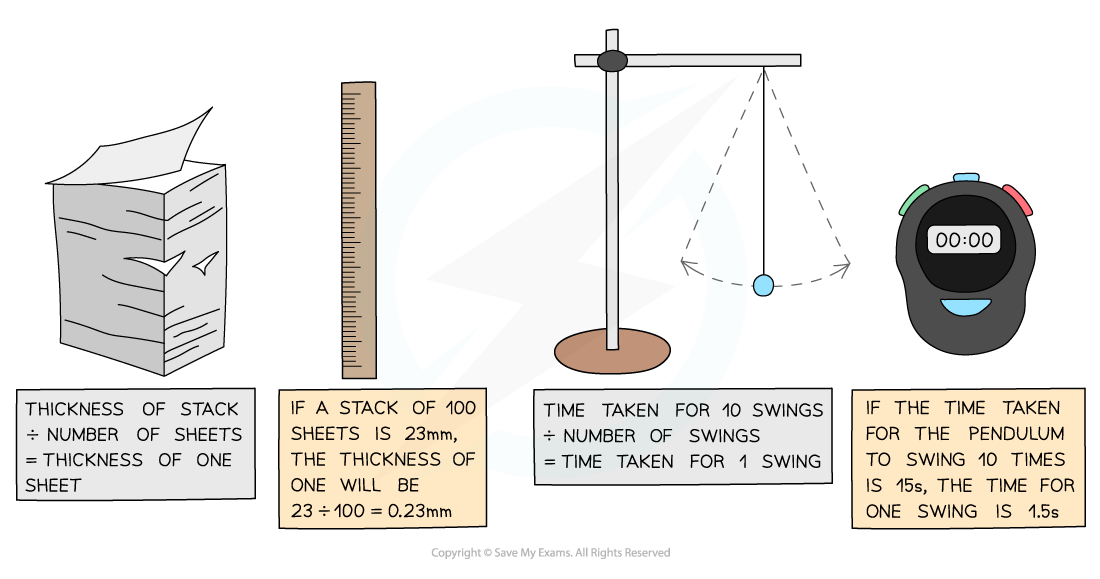
Examples of measurements where multiple readings are needed
Suppose you have to measure the thickness of a sheet of paper
The thing that you are trying to measure is so small that it would be very difficult to get an accurate answer
If, however, you measure the thickness of 100 sheets of paper you can do so much more accurately
Dividing your answer by 100 will then give an accurate figure for the thickness of one sheet
This process of taking a reading of a large number of values and then dividing by the number, is a good way of getting accurate values for small figures, including (for example) the time period of a pendulum
Measure the time taken for 10 swings and then divide that time by 10 to find the average