Circular Motion
Circular Motionvideo
Circular Motion
Velocity is a vector quantity, and the velocity of an object is its speed in a given direction
When an object travels along a circular path, its velocity is always changing
The speed of the object moving in a circle might be constant - that is, it is travelling the same distance every second
However, the direction of travel is always changing as the object moves along the circular path
This means that an object moving in circular motion travels at a constant speed but has a changing velocity
The image below shows an example of a famous object that moves in a circular path with a constant speed but changing direction:
International Space Station Orbiting Earth
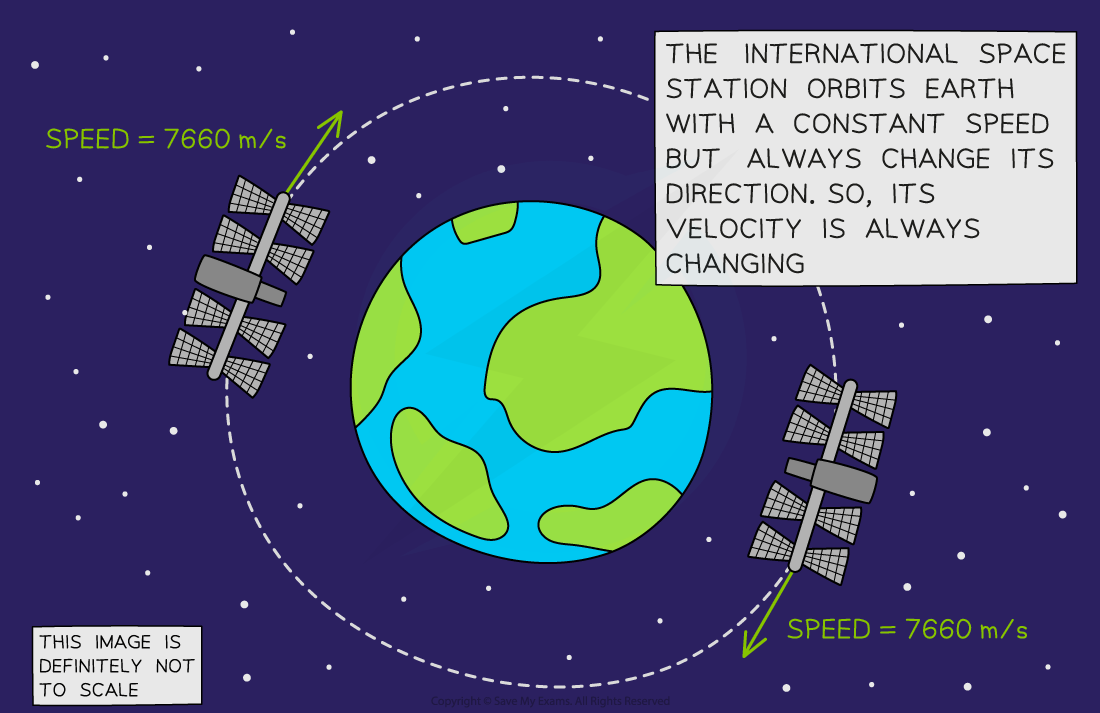
The International Space Station’s velocity is always changing - it whizzes around the Earth at a constant speed of about 7660 m/s but is always changing direction
When a force acts at 90 degrees to an object’s direction of travel, the force will cause that object to change direction
An Impact Force Causing a Change in the Motion of a Car
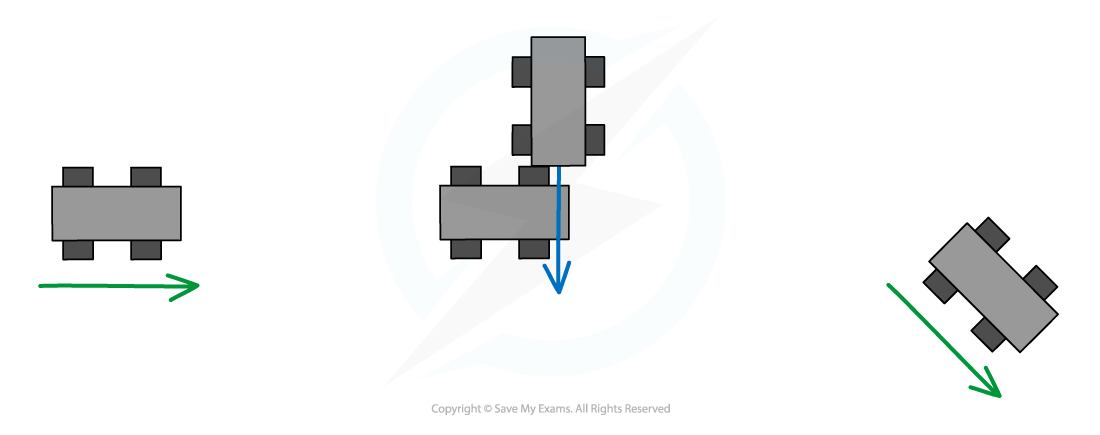
When the two cars collide, the first car changes its direction in the direction of the force
If the force continues to act at 90 degrees to the motion, the object will keep changing its direction (whilst remaining at a constant speed) and travel in a circle
This is what happens when a planet orbits a star (or satellite orbits a planet)
The Moon Orbiting the Earth
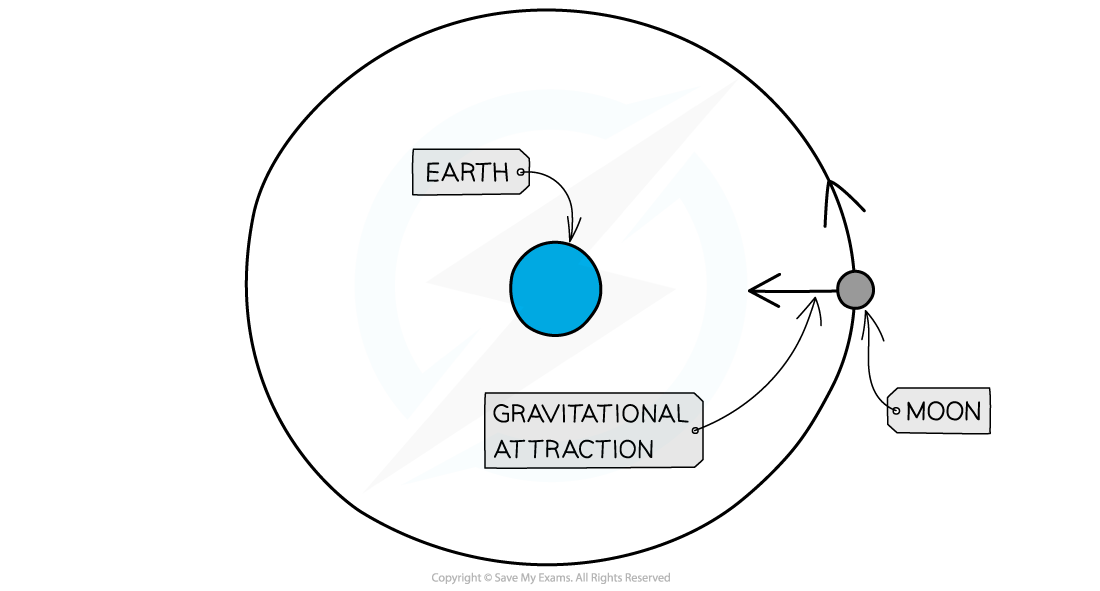
The Moon is pulled towards the Earth (at 90 degrees to its direction of travel). This causes it to travel in a circular path
The force needed to make something follow a circular path depends on a number of factors:
The mass of the object
A greater mass requires a greater force when the speed and radius are constant
The speed of the object
A faster-moving object requires a greater force when the mass and radius are constant
The radius of the circle
A smaller radius requires a greater force to keep the speed and radius constant