Power
Powervideo
Power
Machines, such as car engines, transfer energy from one energy store to another constantly over a period of time
The rate of this energy transfer, or the rate of work done, is called power
Time is an important consideration when it comes to power
Two cars transfer the same amount of energy, or do the same amount of work to accelerate over a distance
If one car has more power, it will transfer that energy, or do that work, in a shorter amount of time
Vehicles with Different Powers
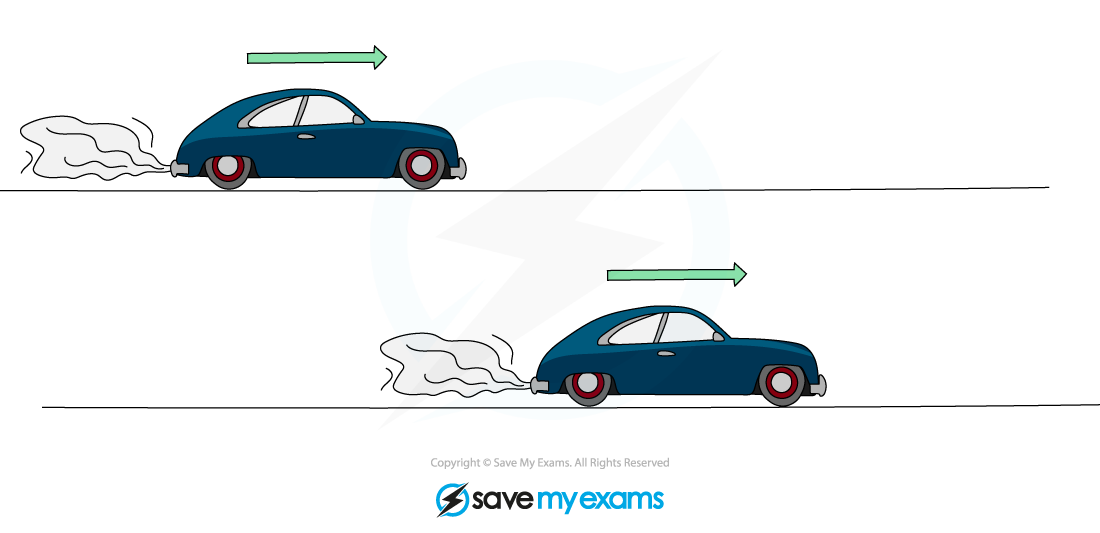
Two cars accelerate to the same final speed, but the one with the most power will reach that speed sooner.
Two electric motors:
lift the same weight
by the same height
but one motor lifts it faster than the other
The motor that lifts the weight faster has more power
Two Motors with Different Powers
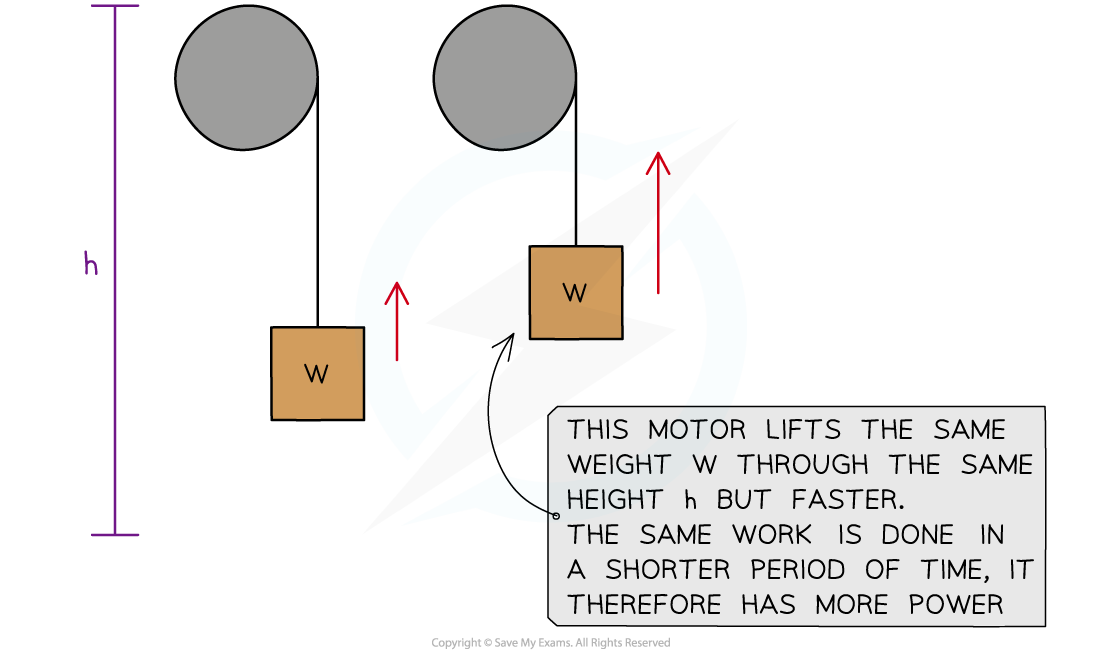
Power is the rate of transfer of energy, or rate of work done. The higher power motor will do the same work in a shorter time.
Power ratings are given to appliances to show the amount of energy transferred per unit time
Common power ratings are shown in the table below:
Power Rating Table
Appliance or Object | Power rating / W |
|---|---|
Torch | 1 |
Electric lightbulb | 100 = 1 × 10² |
Electric cooker | 10 000 = 1 × 10⁴ |
Railway engine | 1 000 000 = 1 × 10⁶ |
Saturn V space rocket | 100 000 000 = 1 × 10⁸ |
Very large power station | 10 000 000 000 = 1 × 10¹⁰ |
World demand for power | 10 000 000 000 000 = 1 × 10¹³ |
A star similar to the Sun | 1 00 000 000 000 000 000 000 000 000 = 1 × 1026 |
Calculating Power
Since power is defined as
The rate of doing work
And work is
Work done = energy transferred
Then, power can be expressed in equation form as
equation
Where:
W or ΔE = The work done, or energy transferred, measured in joules (J)
t = time measured in seconds (s)
P = power measured in watts (W)
Note that these two equations may be written slightly differently, but are representing the same thing - a transfer of energy over time
This equation can be rearranged with the help of a formula triangle:
Formula Triangle for Power
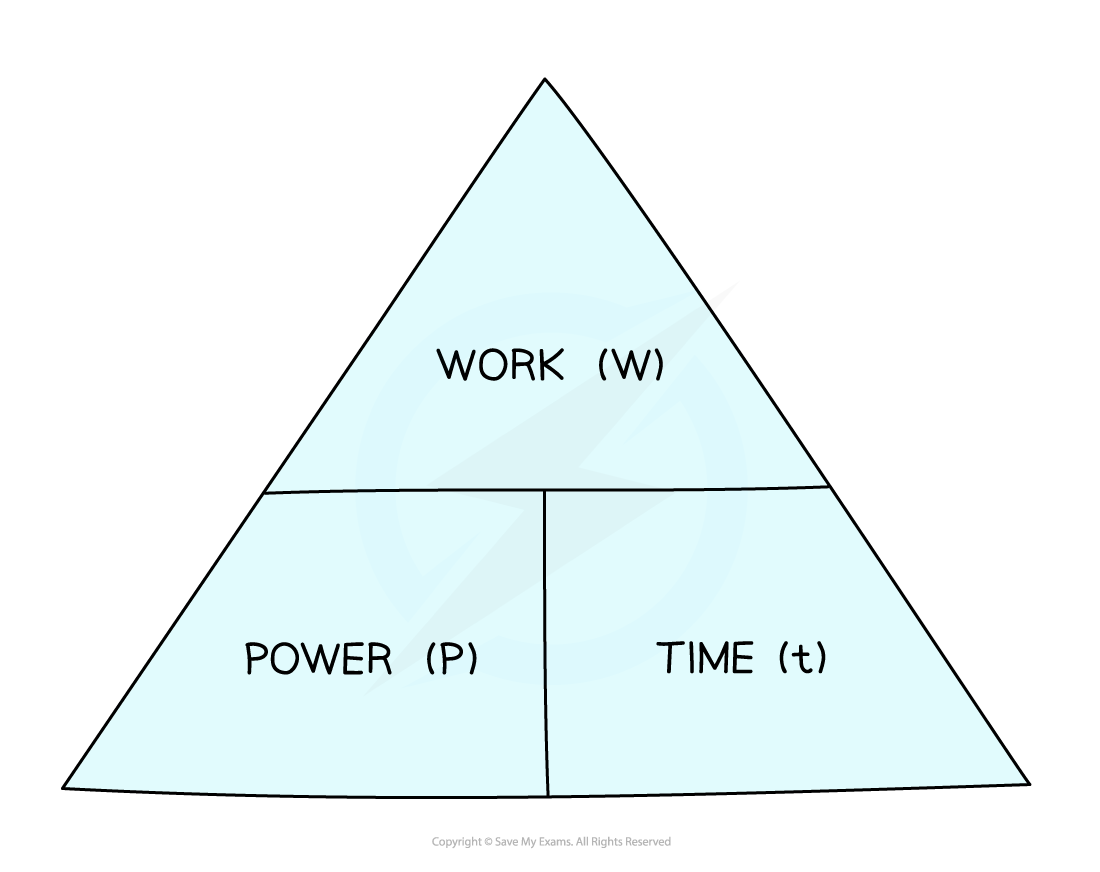
Work, power, time formula triangle