Acceleration
Accelerationvideo
Acceleration
Acceleration is defined as the rate of change of velocity
In other words, it describes how much an object's velocity changes every second
The equation below is used to calculate the average acceleration of an object:
Where:
a = acceleration in metres per second squared (m/s2)
Δv = change in velocity in metres per second (m/s)
Δt = time taken in seconds (s)
The change in velocity is found by the difference between the initial and final velocity, as written below:
change in velocity = final velocity − initial velocity
Where:
v = final velocity in metres per second (m/s)
u = initial velocity in metres per second (m/s)
The equation for acceleration can be rearranged with the help of a formula triangle as shown:
Acceleration equation triangle
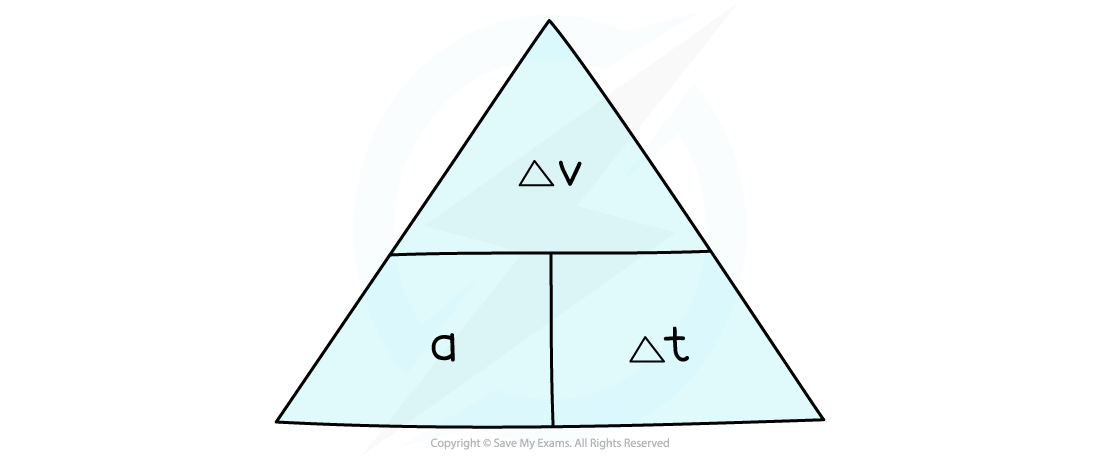
Equation triangle for the change in velocity, acceleration, and change in time
Speeding Up & Slowing Down
An object that speeds up is accelerating
An object that slows down is decelerating
The acceleration of an object can be positive or negative, depending on whether the object is speeding up or slowing down
If an object is speeding up, its acceleration is positive
If an object is slowing down, its acceleration is negative (sometimes called deceleration)
Acceleration and deceleration
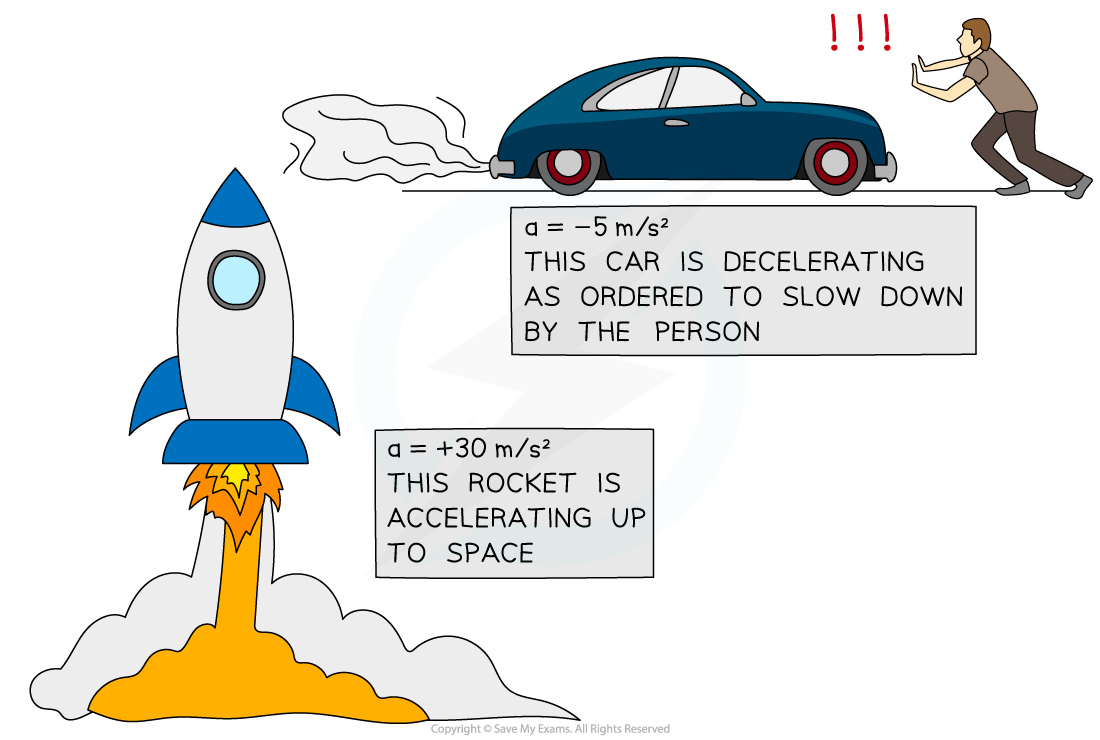
A rocket speeding up (accelerating) and a car slowing down (decelerating)