Efficiency
Efficiency of Energy Transfer
Efficiency of Energy Transfer
The efficiency of a system is a measure of the amount of wasted energy in an energy transfer
Efficiency is defined as:
The ratio of the useful power or energy output from a system to its total power or energy input
If a system has high efficiency, this means most of the energy transferred is useful
If a system has low efficiency, this means most of the energy transferred is wasted
The overall efficiency of a typical thermal power station is approximately 30%
This means that 70% of the energy transferred from the power station to the National Grid is wasted energy
In the production of electricity:
Energy is used to heat water to produce steam
The steam turns a turbine
The turbine turns a generator
The generator produces electricity
At each stage of this process, energy is dissipated to the surroundings
Sankey Diagram of a Power Station
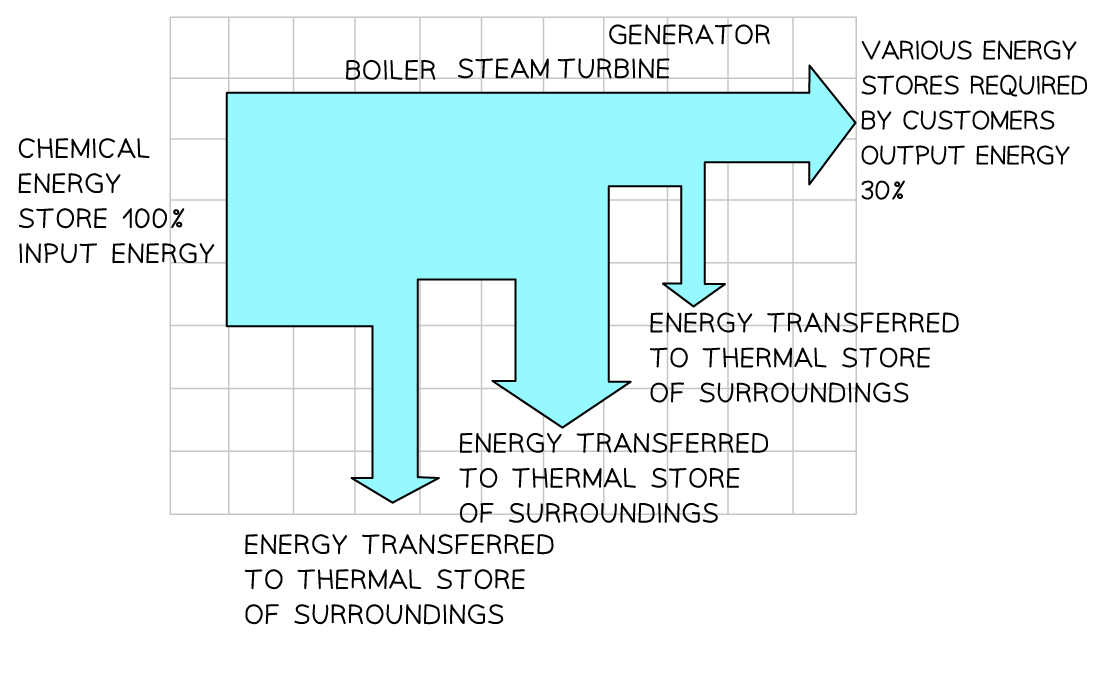
Sankey diagram showing the efficiency of a gas-fired power station
Calculating Efficiency
Efficiency is represented as a percentage, and can be calculated using the equation:
The efficiency equation can also be written in terms of power:
Where power is defined as the energy transferred per unit of time