Mass & Weight
Massvideo
Mass
Mass is a measure of the quantity of matter in an object at rest relative to the observer
Mass is a scalar quantity
The SI unit for mass is the kilogram (kg)
Consequently, mass is the property of an object that resists change in motion
The greater the mass of an object, the more difficult it is to speed it up, slow it down, or change its direction
A mass may sometimes be given in grams (g)
1000 g = 1 kg
1 g = 0.001 kg
Weight
Weight
Weight is a gravitational force on an object with mass
Weight is a force, so it is a vector quantity
The SI units for force are newtons (N)
Weight is the effect of a gravitational field on a mass
Weight is defined as:
The force acting on an object due to gravitational attraction
Planets have strong gravitational fields
Hence, they attract nearby masses with a strong gravitational force
Because of weight:
Objects stay firmly on the ground
Objects will always fall to the ground
Satellites are kept in orbit
Gravitational forces around Earth
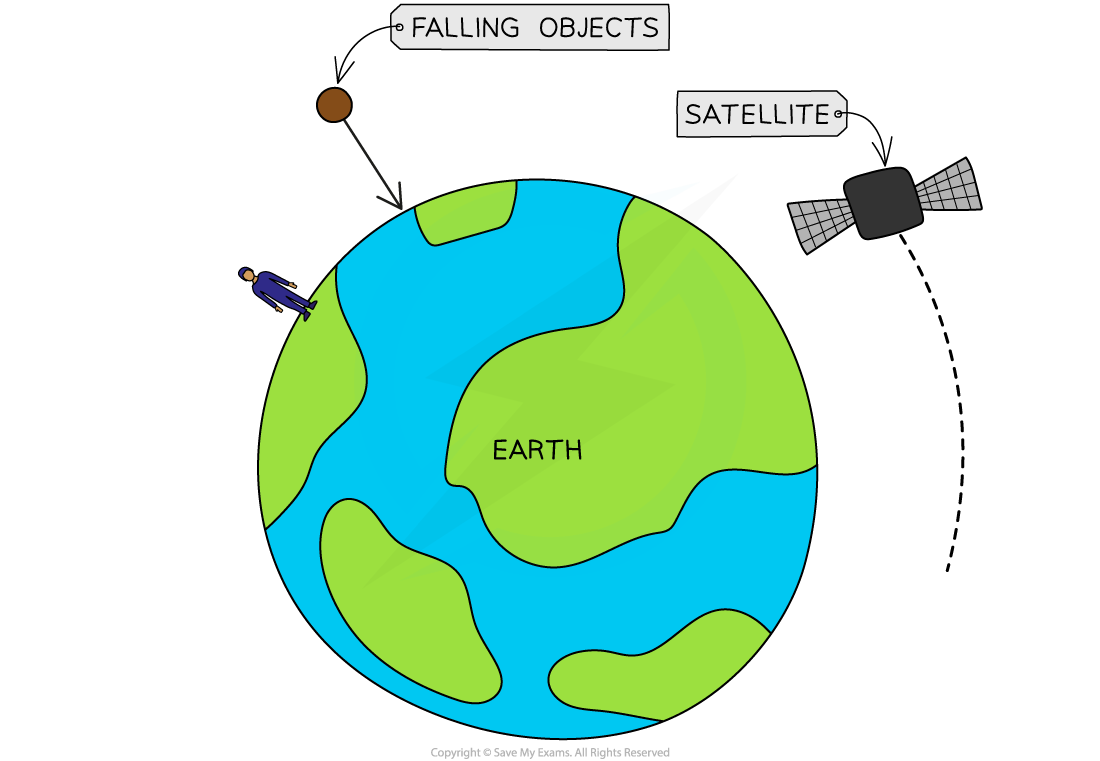
Some of the phenomena associated with gravitational attraction and the weight force
The weight of a body is equal to the product of its mass (m) and the acceleration of free fall (g)
W = mg
Where:
W = weight (N)
m = mass (kg)
g = gravitational field strength (m/s2 or N/kg)
You can rearrange this equation with the help of the formula triangle:
Weight equation triangle
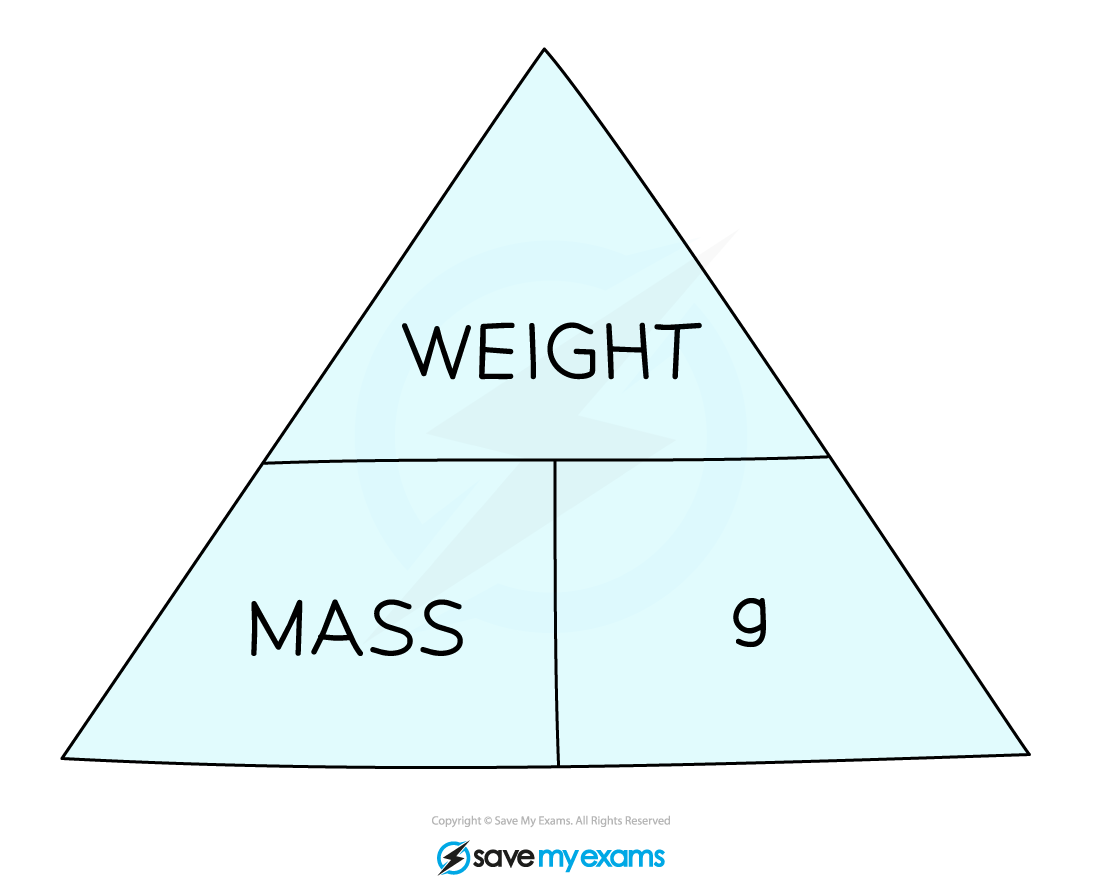
Weight, mass and gravitational field strength equation triangle
Gravitational Field Strength
Gravitational Field Strength
Gravitational field strength is defined as:
The force per unit mass acting on an object in a gravitational field
On Earth, this is equal to 9.8 N/kg
Gravitational field strength is also known as acceleration of free fall, or acceleration due to gravity
In this context the units are m/s2
The value of g (gravitational field strength) varies from planet to planet depending on their mass and radius
A few examples of varying gravitational field strength are shown below:
g on other planets
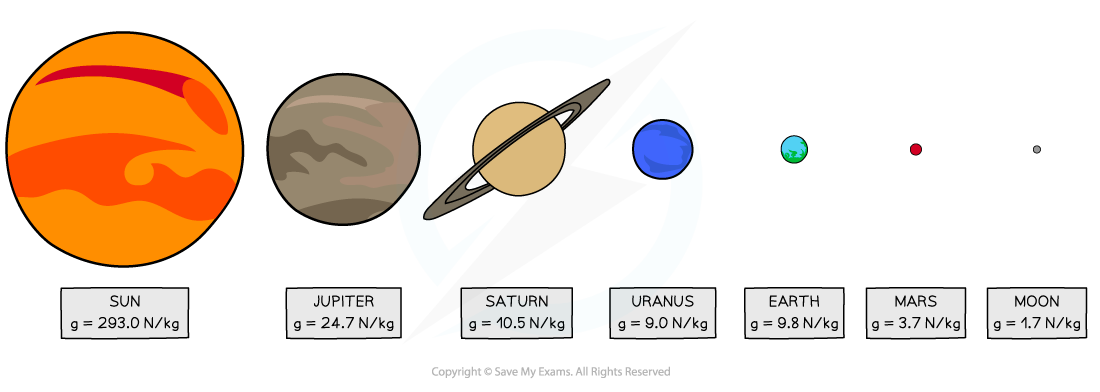
Gravitational field strength of the planets in our solar system
Mass vs. Weight
An object’s mass always remains the same, however, its weight will differ depending on the strength of the gravitational field on different planets
For example, the gravitational field strength on the Moon is 1.63 N/kg, meaning an object’s weight will be about 6 times less than on Earth
Mass vs. weight on the Earth and Moon
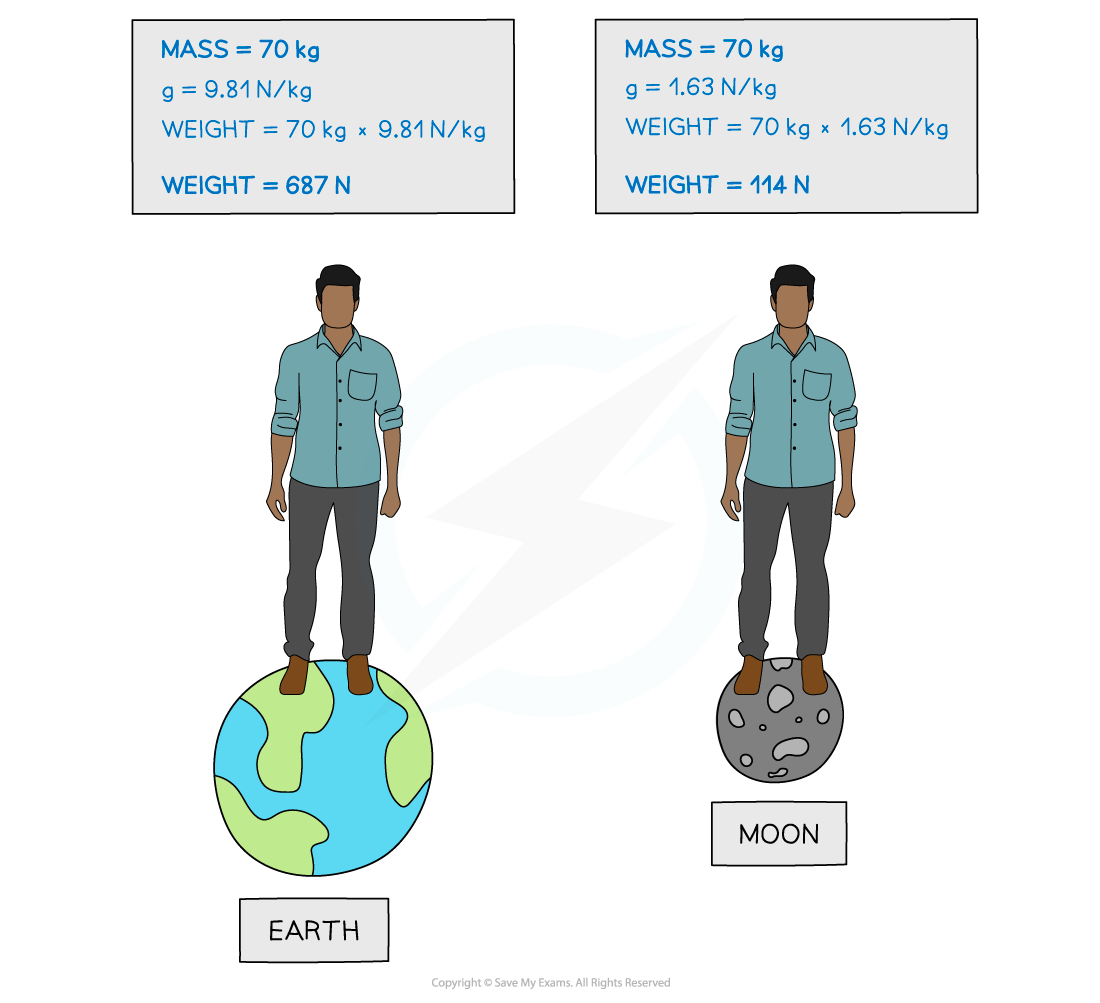
On the moon, your mass will stay the same but your weight will be much lower
Using a Balance
Using a Balance
The weight of two objects can be compared using a balance
Because the gravitational field strength is constant everywhere on Earth, this also allows us to measure the mass of an object
Using a balance
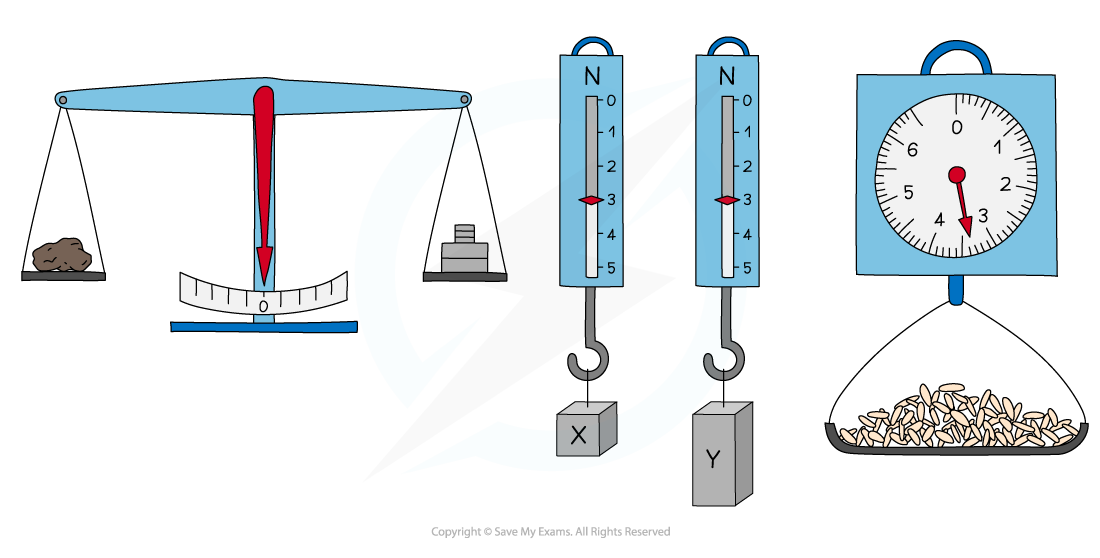
A balance can be used to compare two different weights