Work
Work Done & Energy Transfersvideo
Work Done & Energy Transfers
Work is done when an object is moved over a distance by a force applied in the direction of its displacement
It is said that the force does work on the object
If a force is applied to an object but doesn’t result in any movement, no work is done
Work Done on an Object
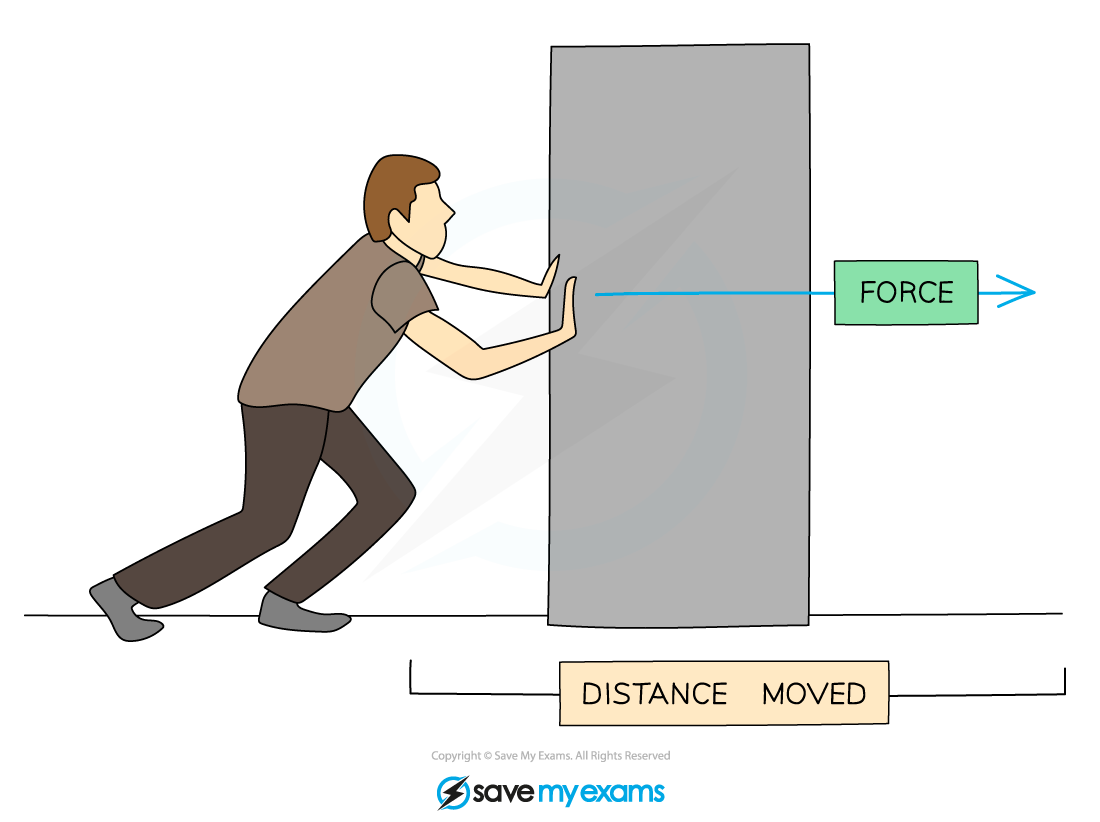
Work is done when a force is used to move an object
The formula for work done is:
Work done = force × distance
Where:
W = work done in joules (J) or newton-metres (N m)
F =force in newtons (N)
d = distance in metres (m)
You can rearrange this equation with the help of the formula triangle:
Formula Triangle for Work Done
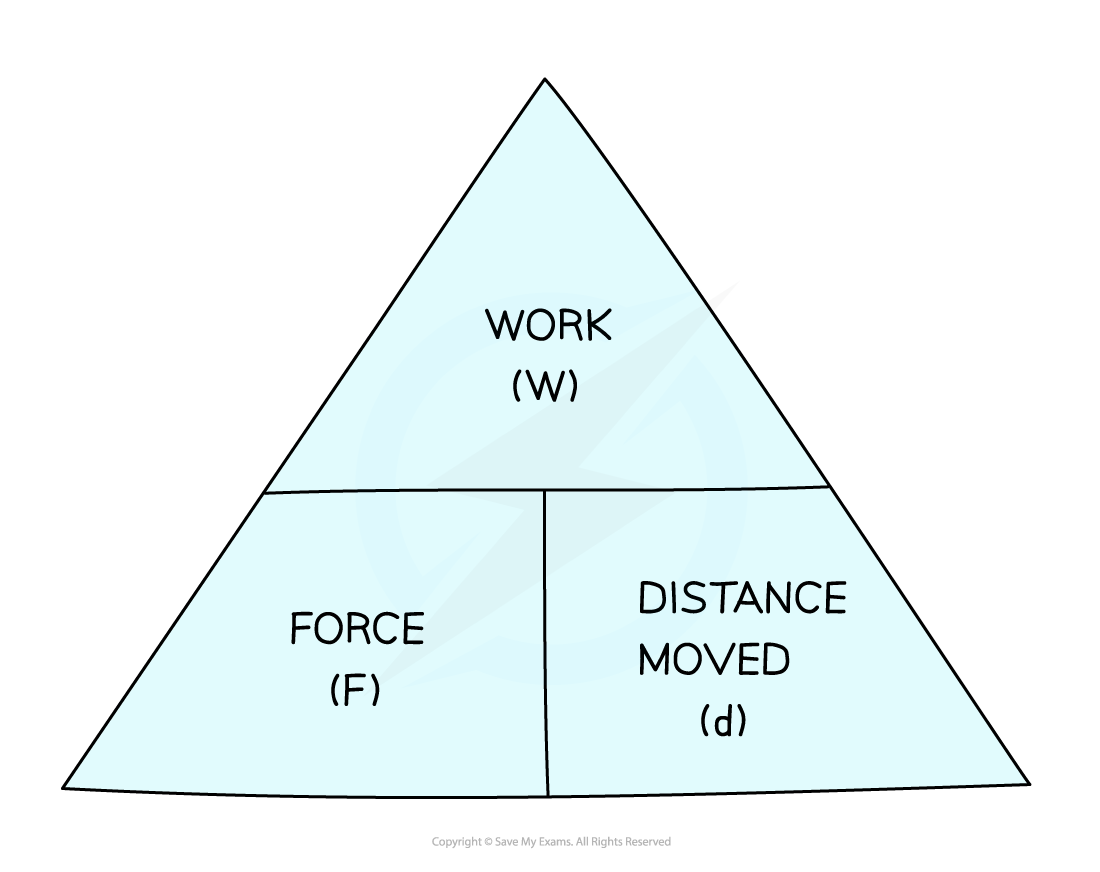
Use the formula triangle to help you rearrange the equation
Multiplying force and distance produces units of newton-metres (N m)
Work is measured in joules (J)
This leads to a simple conversion:
1 J = 1 N m
One joule is equal to the work done by a force of one newton acting through one metre
Therefore, the number of joules is equal to the number of newton-metres, making conversions between the units very straightforward, for example:
1000 J = 1000 N m
Whenever any mechanical work is done, energy is transferred mechanically from one store to another
The amount of energy transferred (in joules) is equal to the work done (in joules or newton-metres)
energy transferred (J) = work done (J)
If a force acts in the direction that an object is moving, then the object will gain energy (usually to its kinetic energy store)
If the force acts in the opposite direction to the movement then the object will lose energy (dissipated to the surroundings usually by heating)
Therefore:
Examples of Work
Work is done on a ball when it is lifted to a height
The energy is transferred mechanically from the ball's kinetic energy store to its gravitational potential energy store
Weight Force Doing Work on a Ball
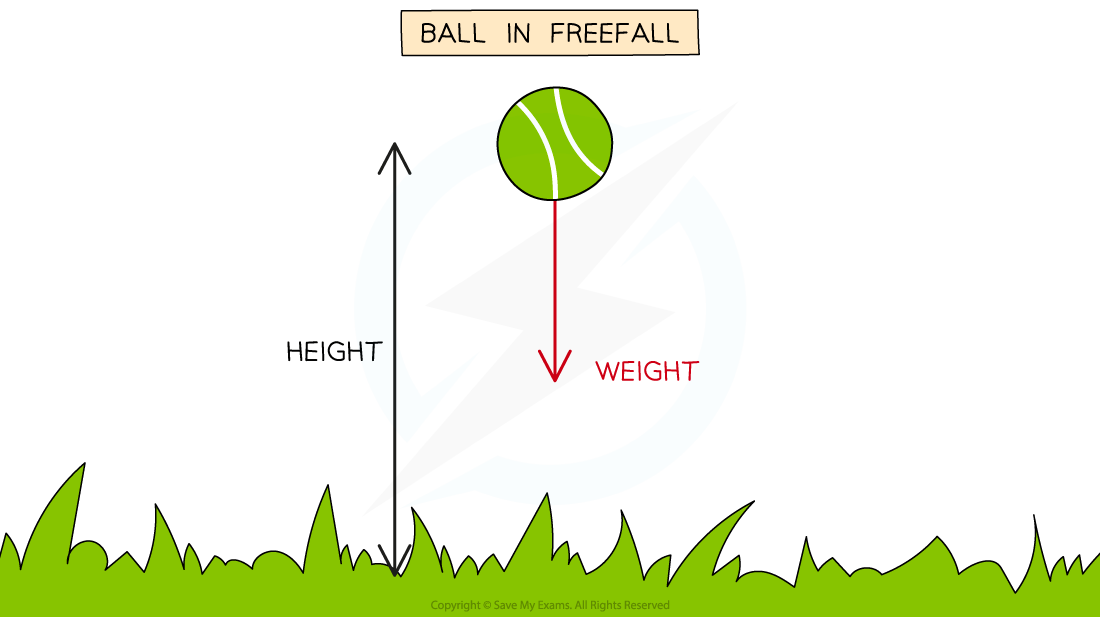
The weight on the ball produced by the gravitational field does work on the ball over a distance
Work is done when a bird flies through the air
The bird must travel against air resistance, therefore energy is transferred from the bird's kinetic store to its thermal store and dissipated to the thermal store of the surroundings
Work Done Opposing Motion
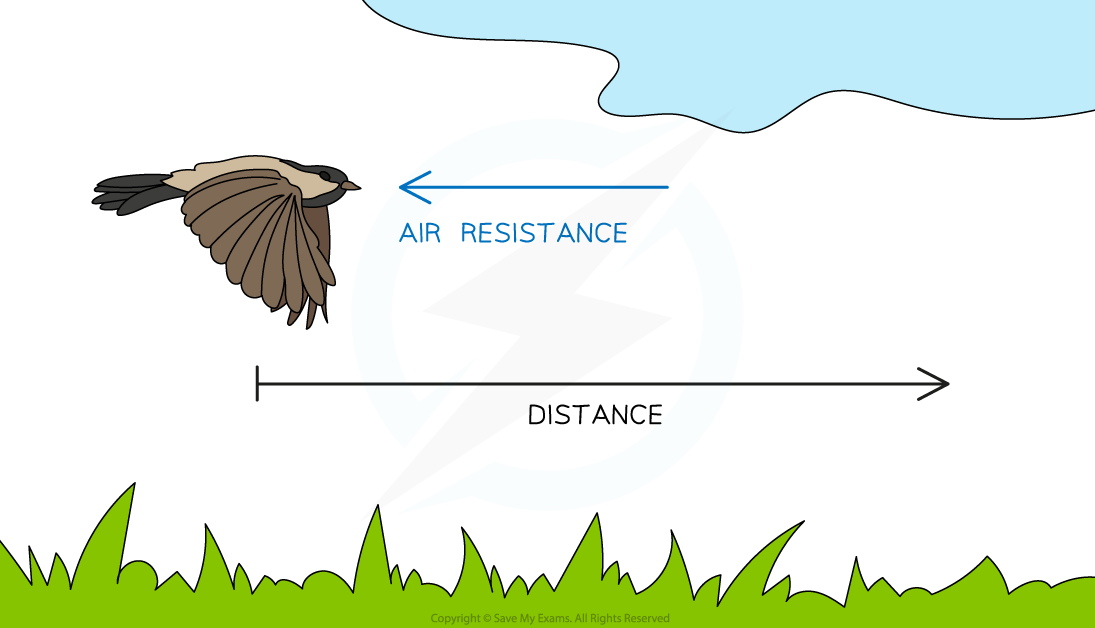
Air resistance (drag) does work against the bird as it flies through the air