Energy from Water
Hydroelectric Damsvideo
Hydroelectric Dams
When water is stored above ground level it has energy in its gravitational potential store
This energy can be transferred to kinetic energy if the water is allowed to flow down the slope
Flowing water turns the turbine to generate electricity
A Hydroelectric Dam Operating
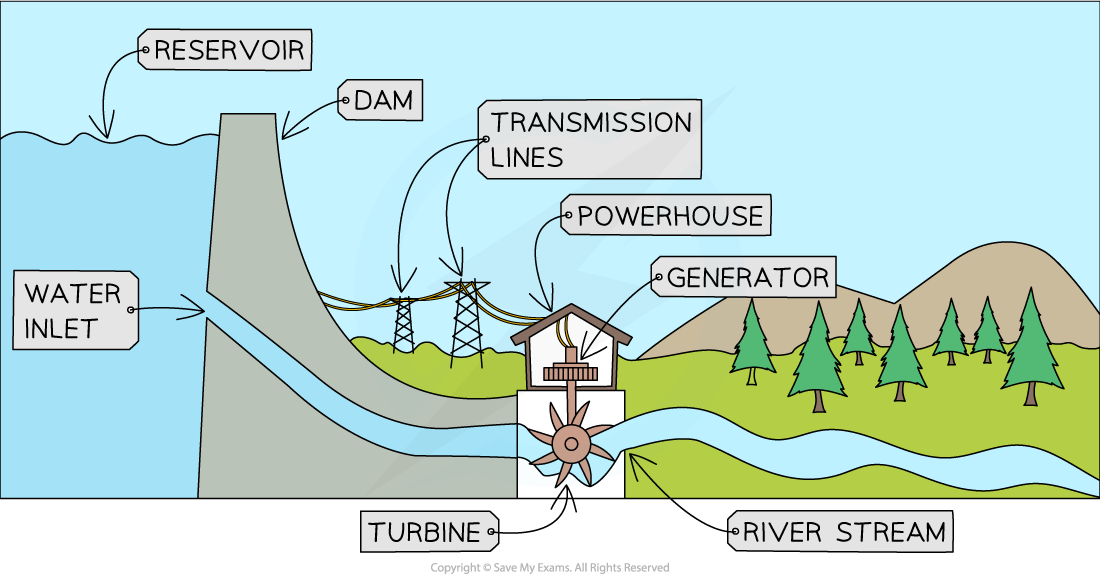
A hydroelectric dam transfers energy from the gravitational potential energy store of the water to its kinetic energy store mechanically to generate electricity
Advantages
Can respond to demand so is reliable and available
Can generate large scale amounts of electricity
Disadvantages
Need to flood valleys to build which destroys habitats, towns and villages
The pumping systems can release large amounts of greenhouse gases
Wave and Tide Power
Wave and Tide Power
The rise and fall of waves or the tide can be used to turn a turbine and generate electricity
Turbines using Wave Power
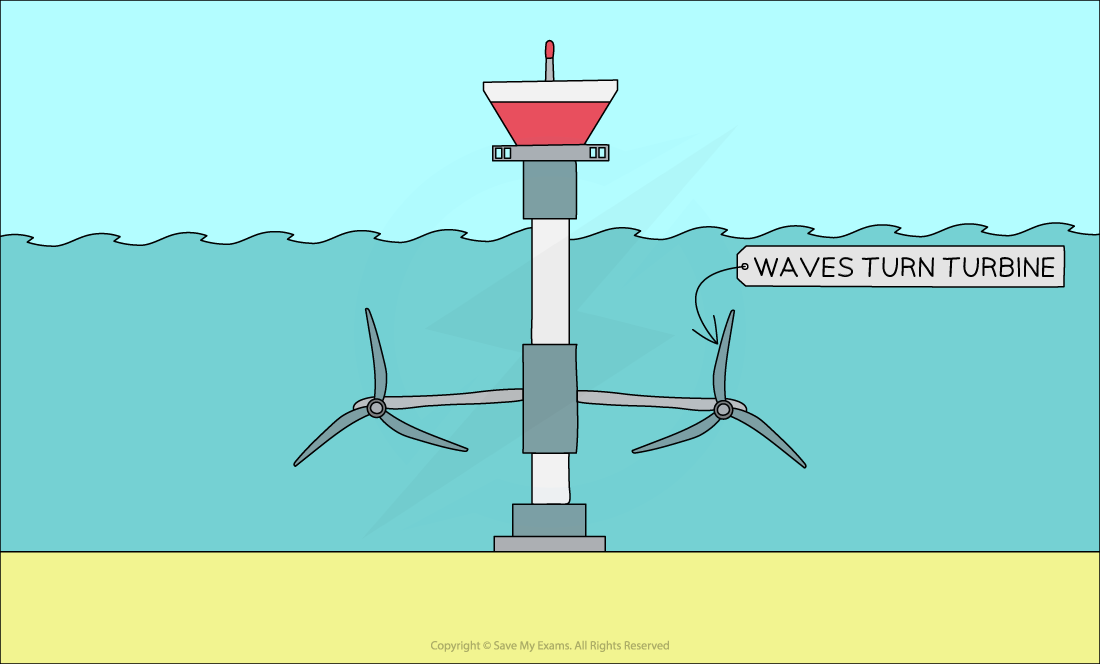
Underwater turbines generate electricity
Turbines using Tidal Power
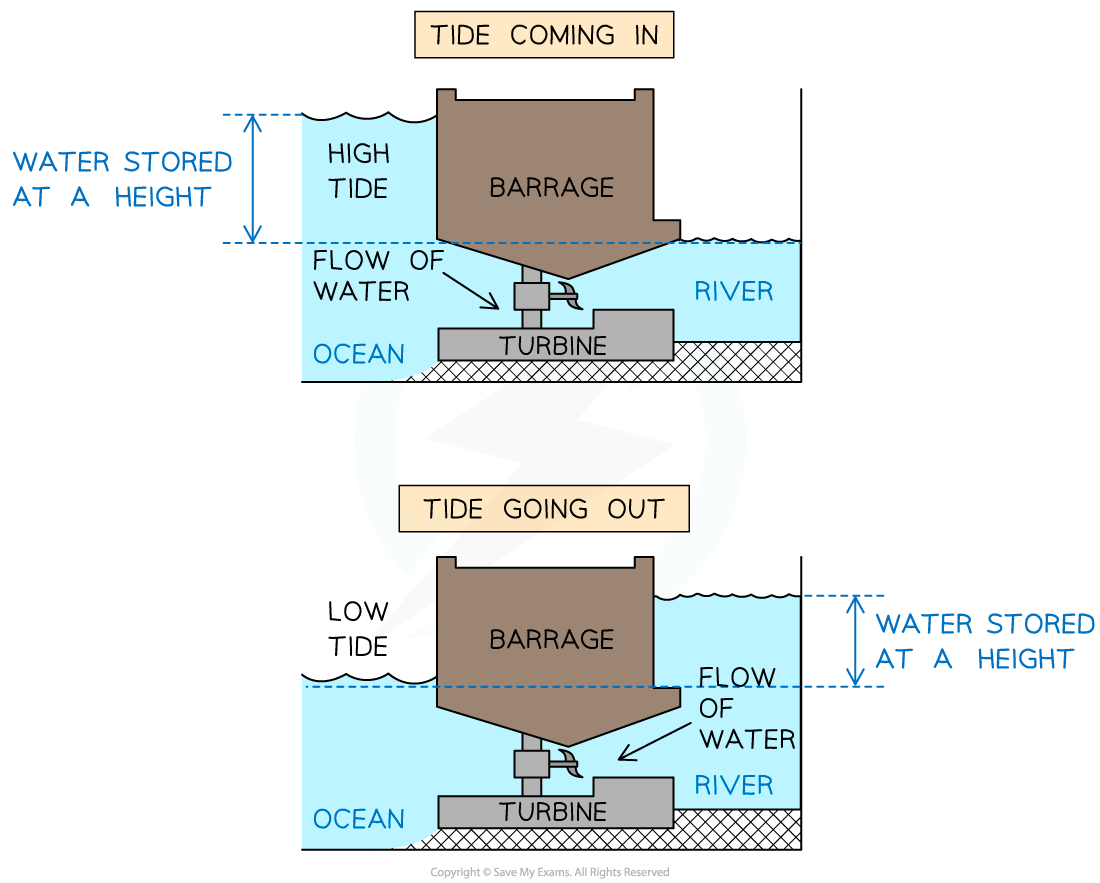
Tidal Barrage
Advantages
No pollution
Reliable and can produce a large amount of electricity at short notice
Renewable energy resource
Small systems are being developed to provide electricity for small islands
Disadvantages
Expensive to build
Damages fragile habitats
Very few suitable locations
The technology is not advanced enough for large scale electricity production