Calculating Acceleration from Speed-Time Graphs
Interpreting Graphs - Acceleration
Interpreting Speed-Time graphs
If there is a change in an object's speed, then it is accelerating
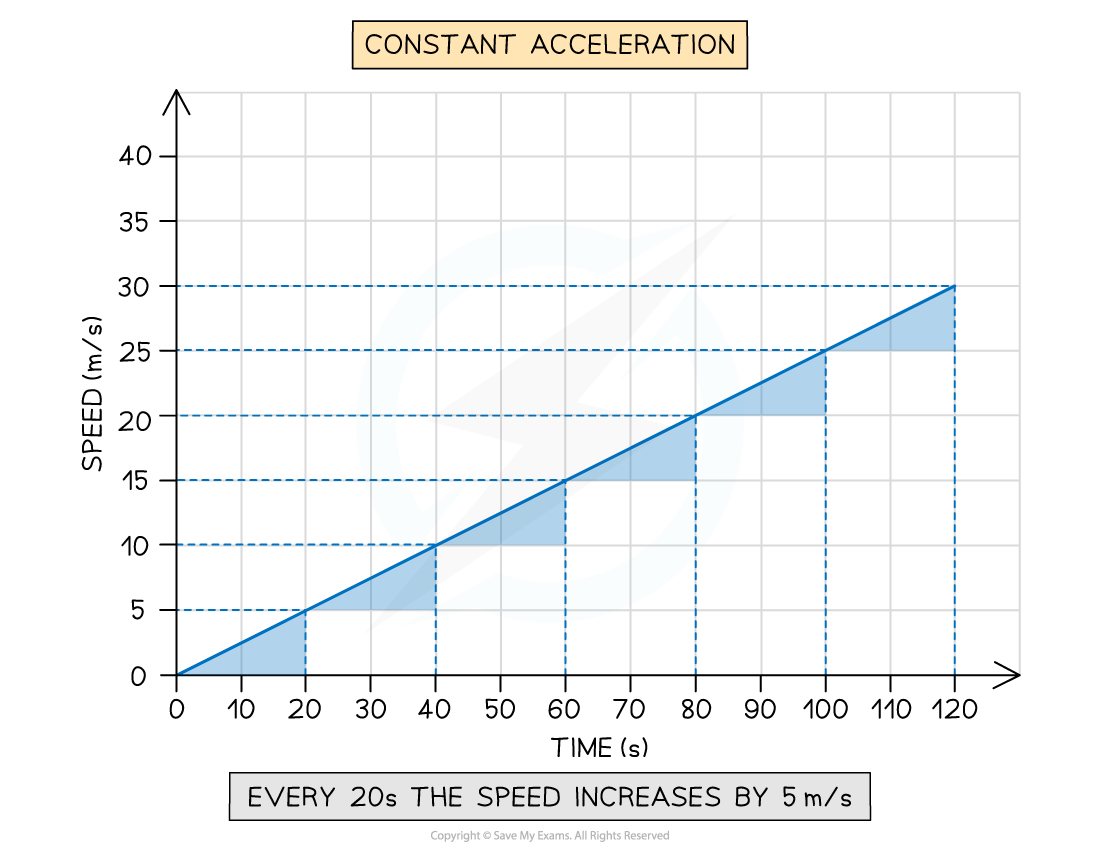
An object may accelerate at a steady rate, this is called constant acceleration
On a speed-time graph this will be a non-horizontal straight line
Constant acceleration
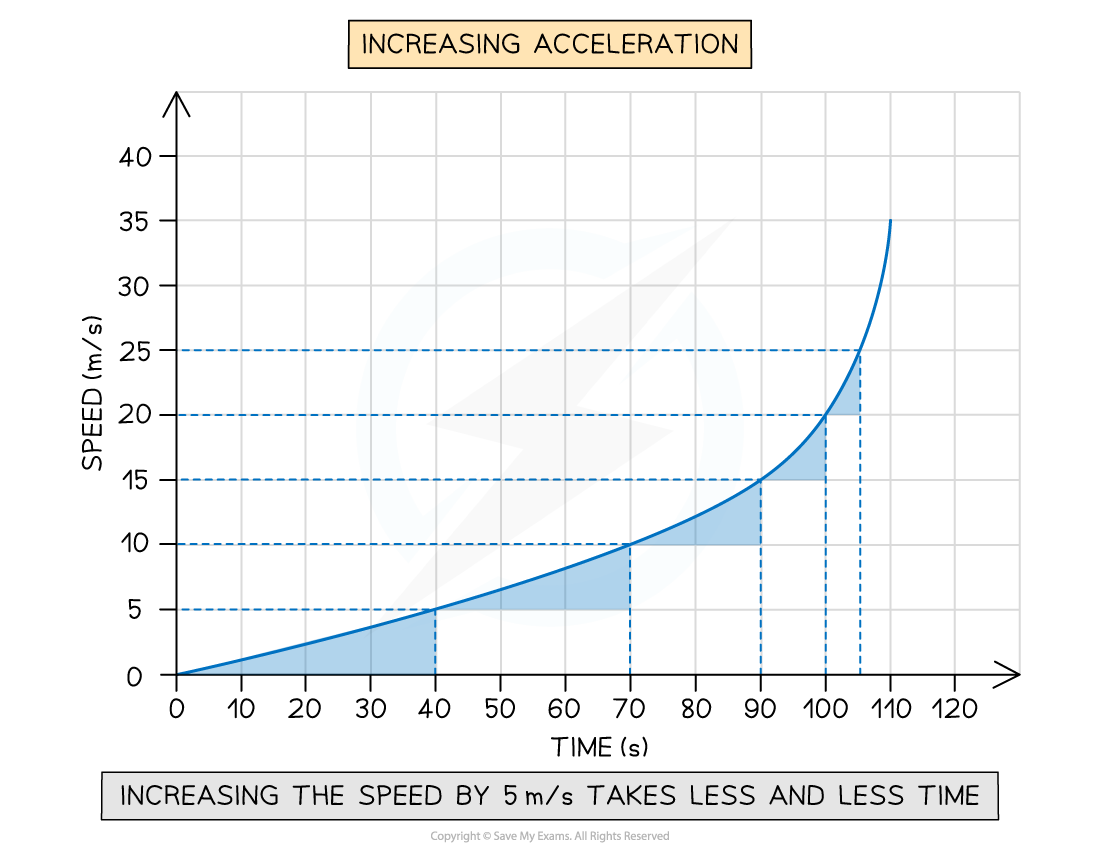
An object may accelerate at an increasing rate
On a speed-time graph this would be an upward curve
Increasing acceleration
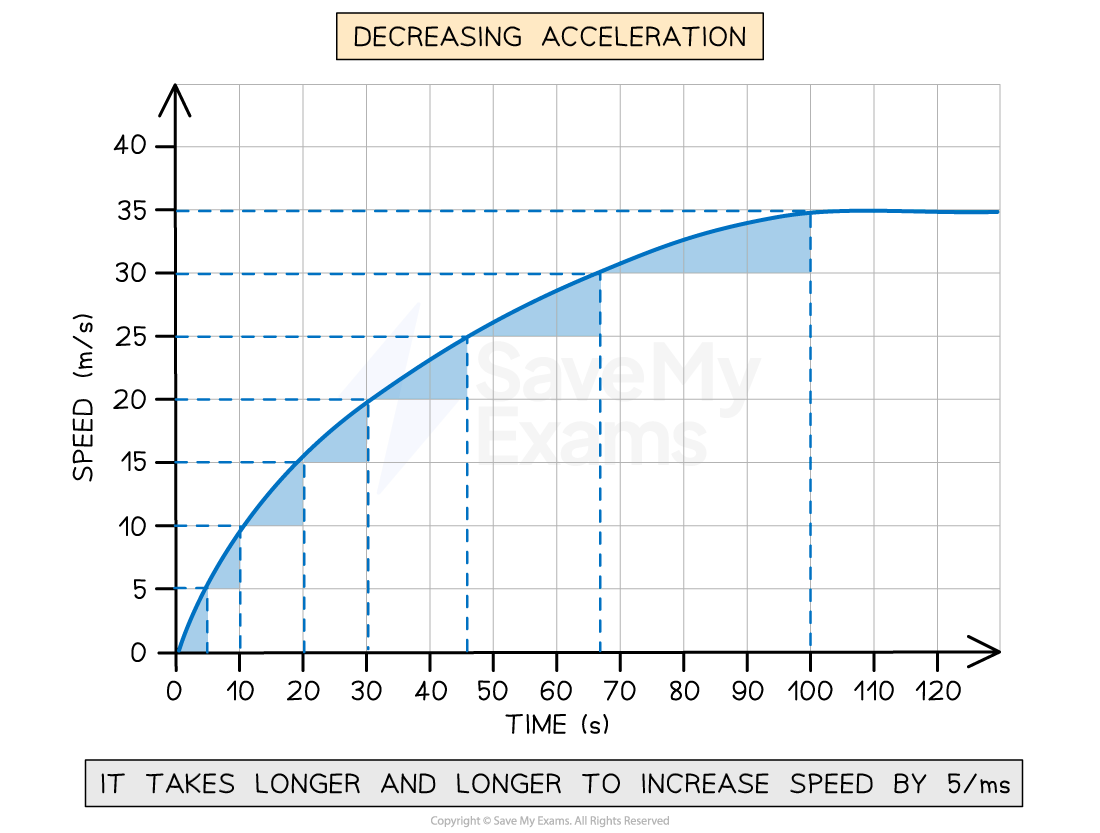
An object may accelerate at a decreasing rate
On a speed-time graph this would be an upward curve with a decreasing gradient
An object is said to decelerate if its speed is decreasing over time, i.e. its acceleration is negative
On a speed-time graph this would be a downward line
If the line is a non-horizontal straight line, deceleration is constant
If the line is a curve with an increasing gradient, deceleration is increasing
If the line is a curve with a decreasing gradient, deceleration is decreasing
Calculating Acceleration
Calculating Acceleration
The acceleration of an object can be calculated from the gradient of a speed-time graph
Gradient of a speed-time graph
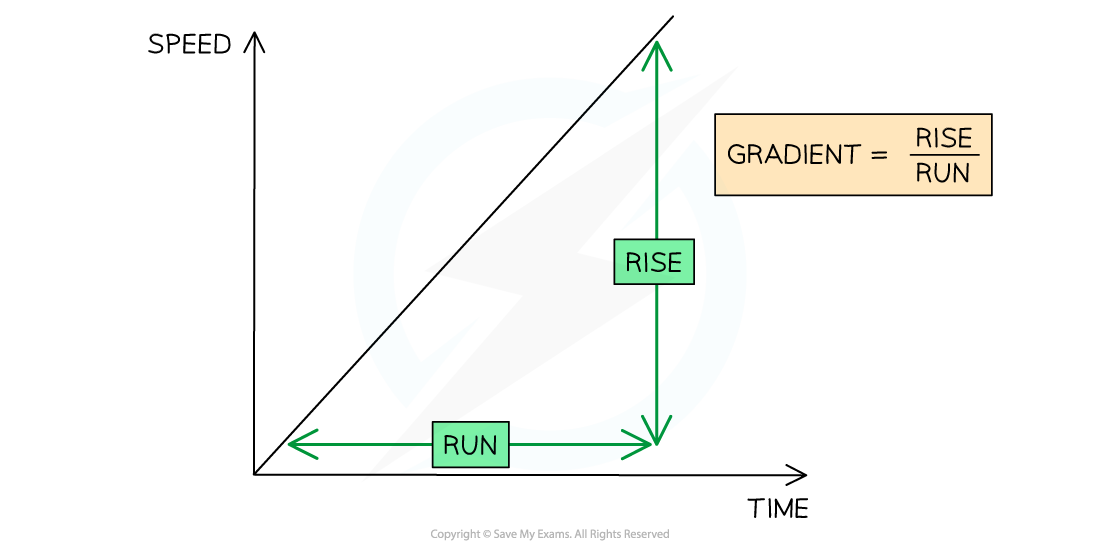
How to find the gradient of a speed-time graph