Density
Densityvideo
Density
Density is defined as:
The mass per unit volume of a material
Objects made from low density materials typically have a low mass
Similarly sized objects made from high density materials have a high mass
For example, a bag full of feathers is far lighter compared to a similar bag full of metal
Or another example, a balloon is less dense than a small bar of lead despite occupying a larger volume
Density is related to mass and volume by the following equation:
Where:
ρ = density (kg/m3)
m = mass (kg)
V = volume (m3)
Gases, for examples, are less dense than solids because the molecules are more spread out (same mass, over a larger volume)
Gases vs. liquids density
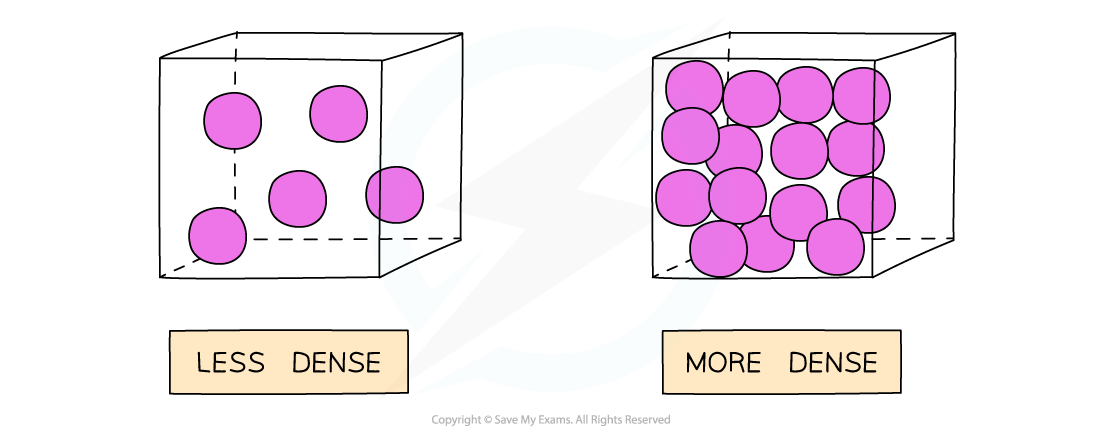
Gases are less dense than solids
This equation can be rearranged with the help of the formula triangle:
Density equation triangle
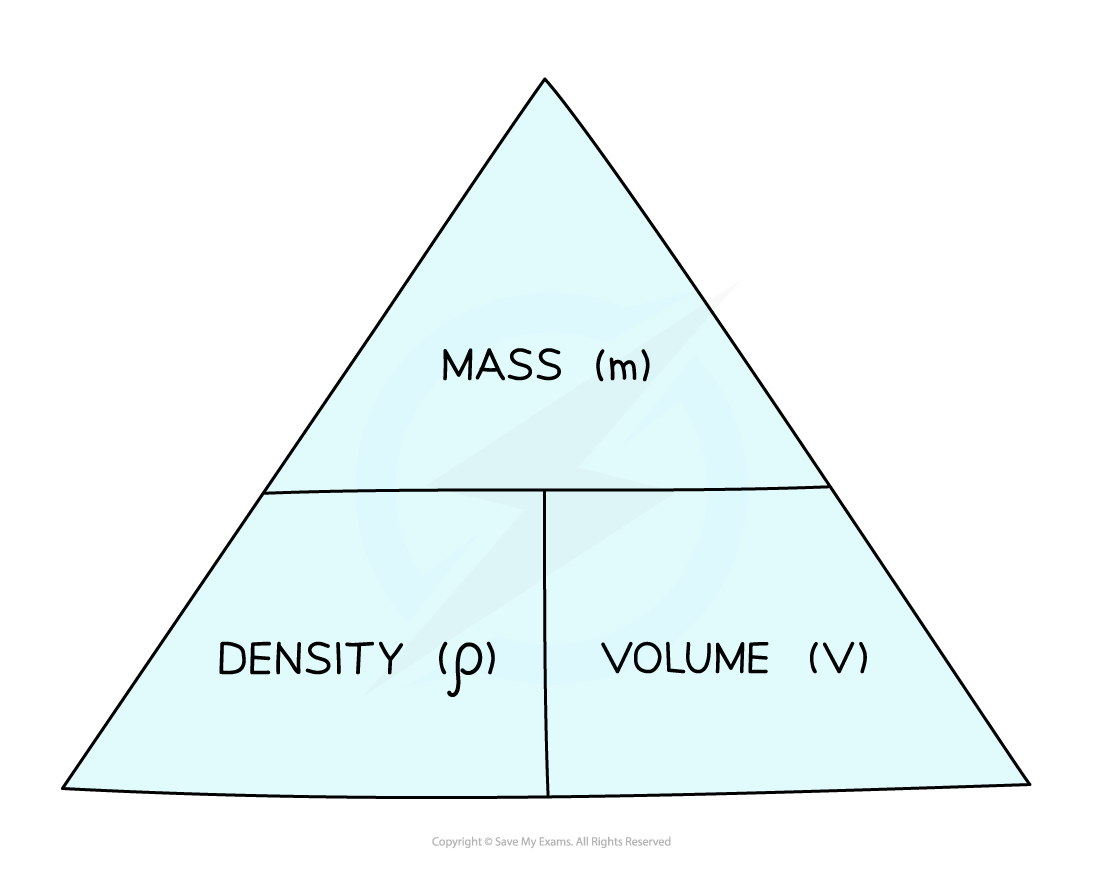
Density, mass, volume equation triangle
The units of density depend on what units are used for mass and volume:
If the mass is measured in g and volume in cm3, then the density will be in g/cm3
If the mass is measured in kg and volume in m3, then the density will be in kg/m3
This table gives some examples of densities on common materials
If a material is more dense than water (1000 kg/m3), then it will sink
Approximate Densities of Materials Table
Material | Approximate Density (kg/m3) |
|---|---|
Air | 1.3 |
Wood | 300 - 800 (depending on species) |
Water | 1000 |
Granite | 2700 |
Lead | 11 300 |
The volume of an object may not always be given directly, but can be calculated with the appropriate equation depending on the object’s shape
Volumes of common 3D shapes
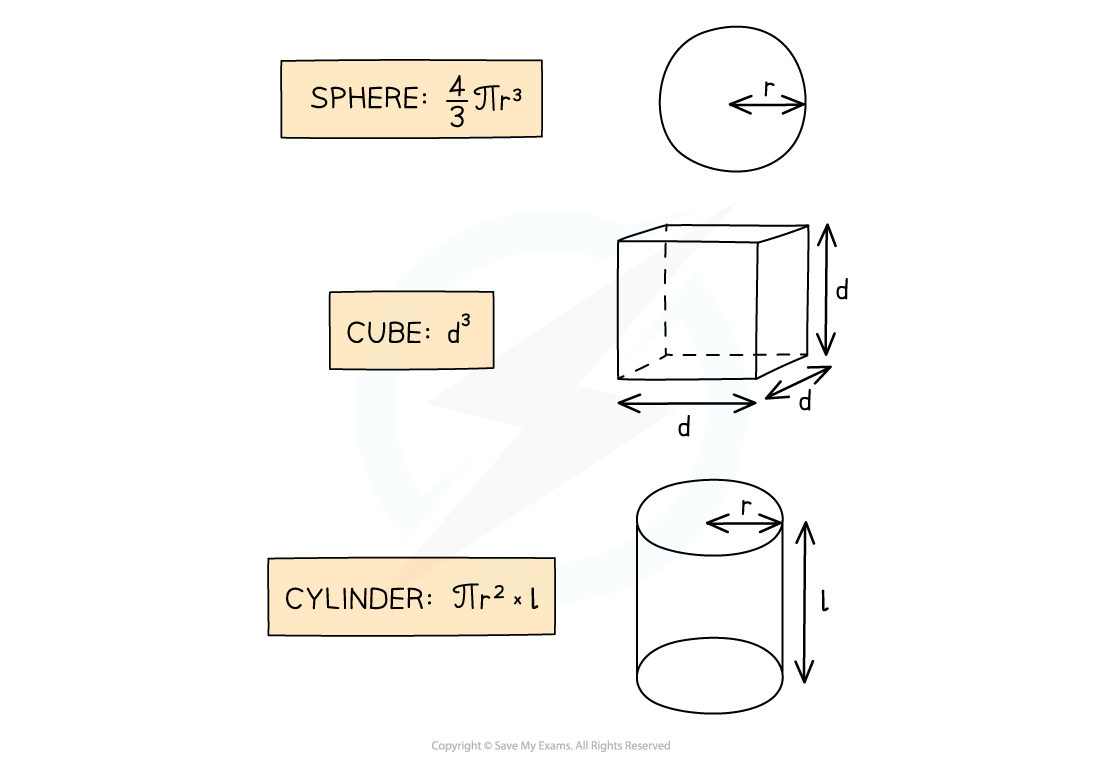
The volumes depends on the shape