Energy from the Sun
Energy from the Sun
Energy from the Sun
Most of our energy resources on the Earth come from the Sun:
The Sun heats up the atmosphere, creating wind and producing waves
Water evaporated by the Sun falls as rain, filling up reservoirs
Plants grown using sunlight form the basis for fuels – both biofuels and fossil fuels
Some forms of energy, however, do not come from the Sun, these include:
Geothermal – this comes from heat produced in the Earth’s core
Nuclear – this comes from elements which make up a small proportion of the Earth’s crust
Tidal – this comes (mainly) from the gravitational attraction of the Moon
Solar Radiation
The energy from the Sun that falls on the Earth is transferred by radiation
This is mostly visible light and infrared radiation
The amount of energy transferred from the Sun to the Earth each hour is equal to the energy use of the world in one year
Therefore, scientists are working hard to find methods of harnessing this energy
Solar energy has a low energy density, which means large collecting devices are required
Collecting solar energy is expensive (due to the equipment required) and inefficient
Solar Cells
Solar cells transfer energy from sunlight electrically producing a current, and therefore generating electricity
Solar cells, sometimes called photovoltaic cells, are made of semiconducting materials
A number of cells connected together can supply electricity to homes, small-scale businesses, communication devices and satellites
Energy generated from solar cells can be stored in batteries for later use
Field of Solar Cells
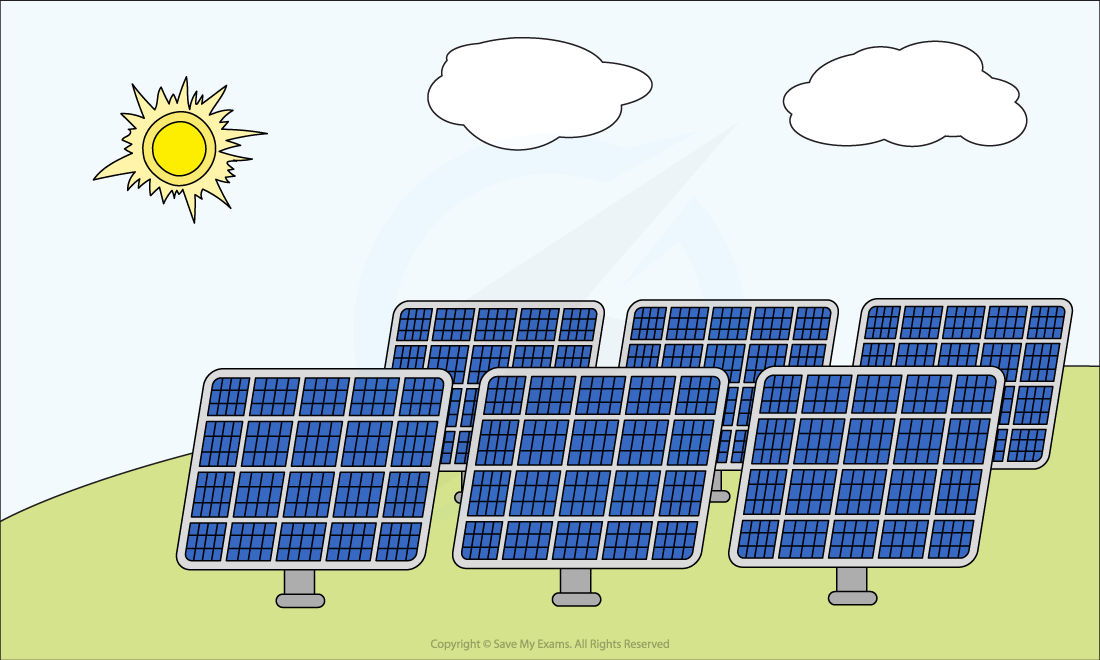
Solar cells use energy from sunlight to produce electricity
Solar Panels
Solar panels transfer energy from sunlight to the thermal store of the solar panels
This can be used to heat water in pipes for domestic water supplies
This can reduce the cost of producing hot water since it is heated partially by the solar panel
Function of a Solar Panel
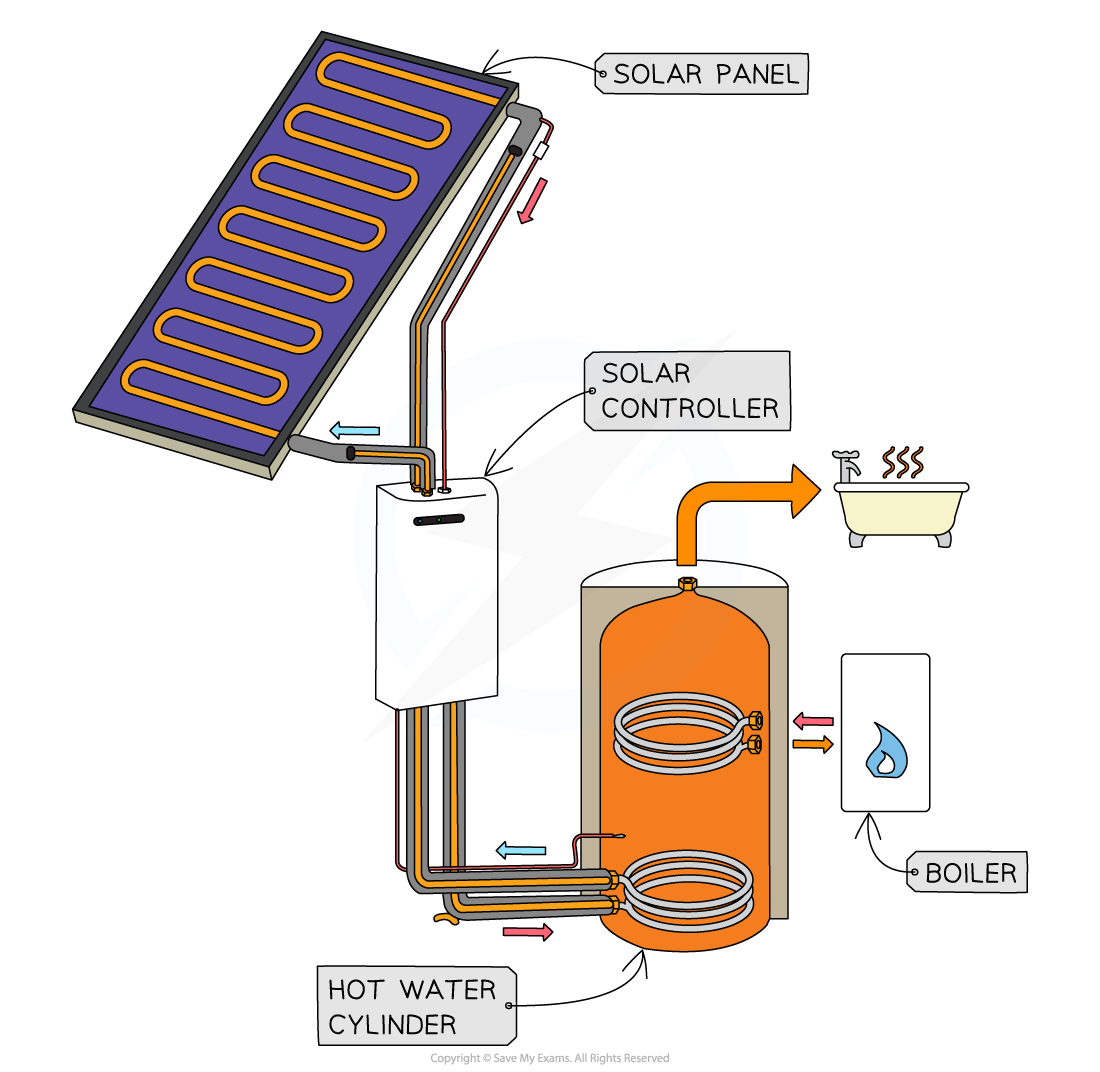
Solar panels use energy from sunlight to heat water
Solar Furnaces
Solar furnaces consist of large curved mirrors that focus the Sun's rays onto a small area
These can be used to heat water to generate steam which can turn turbines and generate electricity in a power station
Water is stored in a water tank and pumped through small pipes running through the solar panel
Infrared radiation from the Sun heats the water in the pipes as it flows through them
The water returns to the tank at a higher temperature
Water may still need to be heated further to reach the desired temperature (e.g. for a shower)
Advantages of Solar Energy
Solar energy is a renewable resource
In many places on Earth, sunlight is a reliable energy resource (i.e. places where the Sun shines most of the time)
Solar farms produce no greenhouse gases or pollution
Solar energy can be generated in remote places and in individual homes
Solar panels are cheaper to produce and maintain than other energy sources
Disadvantages of Solar Energy
Solar farms need to be large scale to produce large amounts of electricity and this requires vast areas of land
People often don't like the appearance of large solar farms, this is known as visual pollution
In many places on Earth, sunlight is not a reliable energy resource (i.e. places where there is a lot of cloud cover)