Pressure in a Liquid
Pressure in Liquidsvideo
Pressure in Liquids
A fluid is either a liquid or a gas
When an object is immersed in a fluid, the fluid will exert pressure, squeezing the object
This pressure is exerted evenly across the whole surface of the fluid and in all directions
The pressure exerted on objects in fluids creates forces against surfaces
These forces act at 90 degrees (at right angles) to the surface
Pressure on an object in a fluid
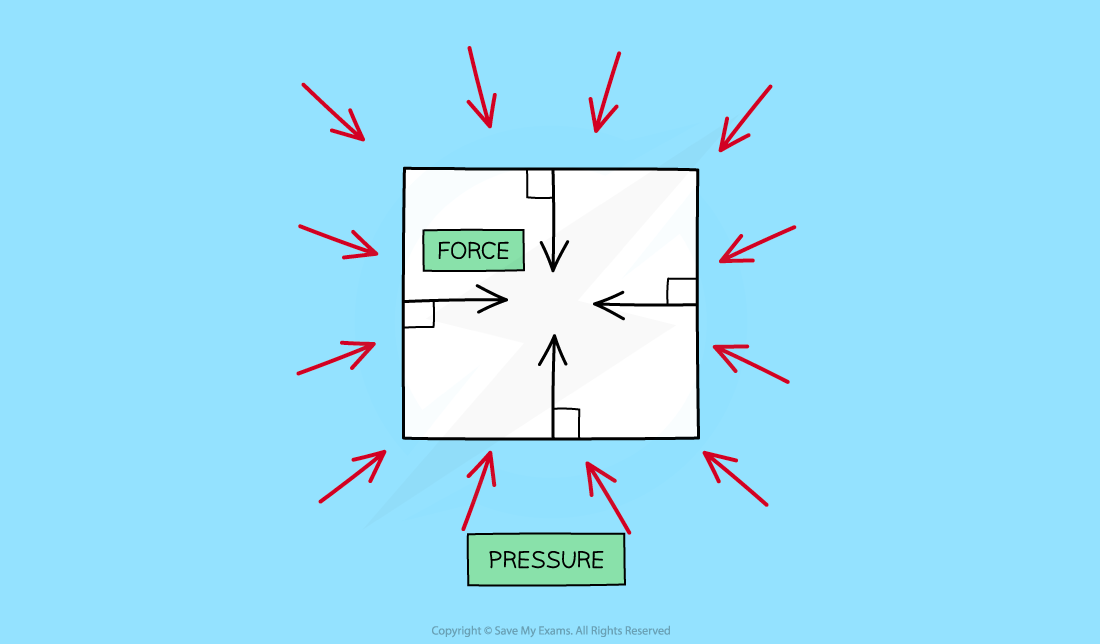
The pressure of a fluid on an object creates a force normal (at right angles) to the surface
The pressure of a fluid on an object will increase with:
Depth within the fluid
Increased density of the fluid
Liquid barometers
Barometers are instruments used to measure atmospheric pressure
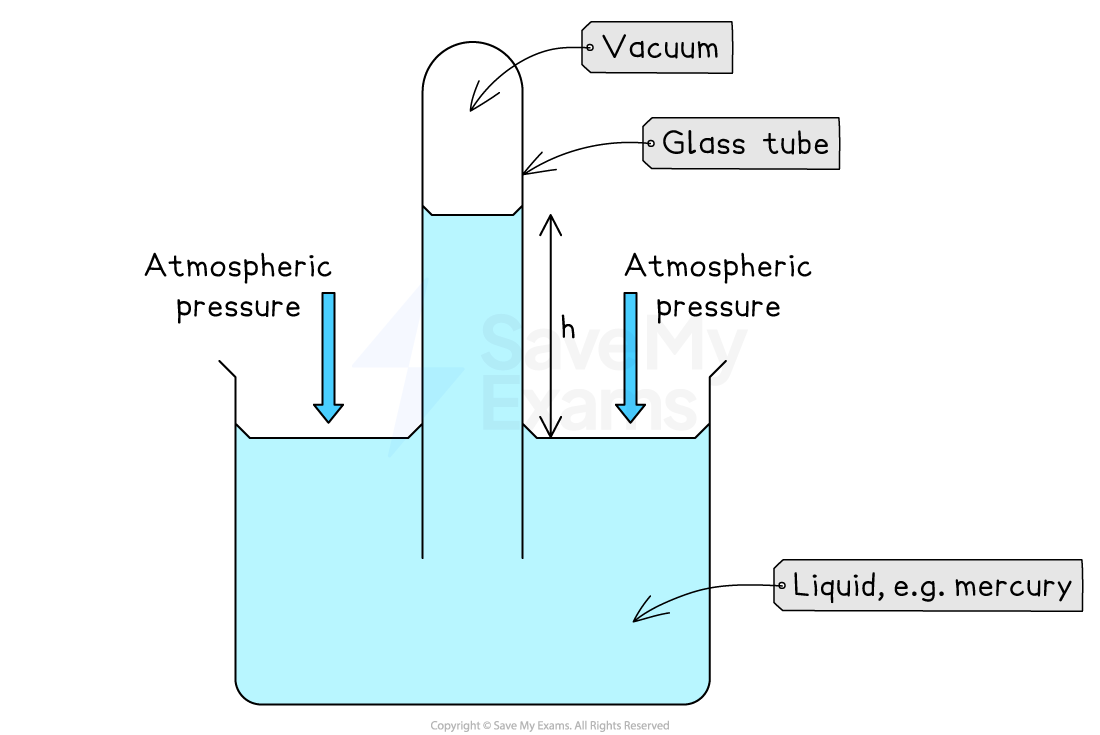
A liquid barometer consists of a glass tube filled with liquid, inverted into a container of the same liquid, with a vacuum at the top of the tube
Atmospheric pressure pushes the liquid up the tube
The height of the liquid column indicates the atmospheric pressure
The higher the atmospheric pressure, the higher the liquid rises in the tube
The lower the atmospheric pressure, the lower the column height
A common example is a mercury barometer
Calculating Pressure in Liquids
Calculating Pressure in Liquids
The pressure is more accurately the difference in pressure at different depths h in a liquid, since the pressure changes with the depth
The pressure due to a column of liquid can be calculated using the equation
Where:
Δp = change in pressure in pascals (Pa)
Where 1 Pa = 1 N/m2
ρ = density of the liquid in kilograms per metre cubed (kg/m3)
g = gravitational field strength on Earth in newtons per kilogram (N/kg)
Δh = change in height of the column in metres (m)
The force from the pressure is exerted evenly across the whole surface of an object in a liquid, and in all directions
Even pressure on an object in a fluid
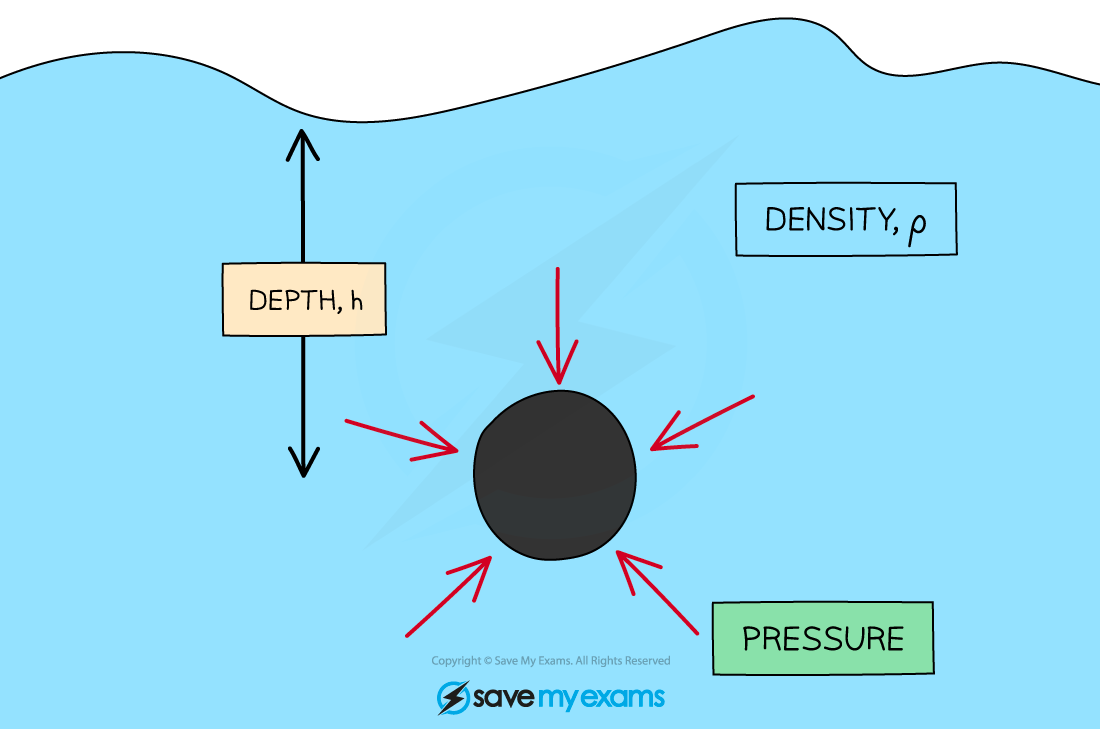
The force from the pressure of objects in a liquid is exerted evenly across its whole surface