Friction
Friction
Friction
Friction is a force that works in opposition to the motion of an object
This slows down the motion of the object
When friction is present, energy is transferred in the form of heat
This raises the temperature (thermal energy) of the object and its surroundings
The work done against the frictional forces causes this rise in the temperature
Friction in solids is caused by imperfections in the surfaces of the objects moving over one another
Not only does this slow the object down but also causes an increase in thermal energy
Friction Acting on a Sledge
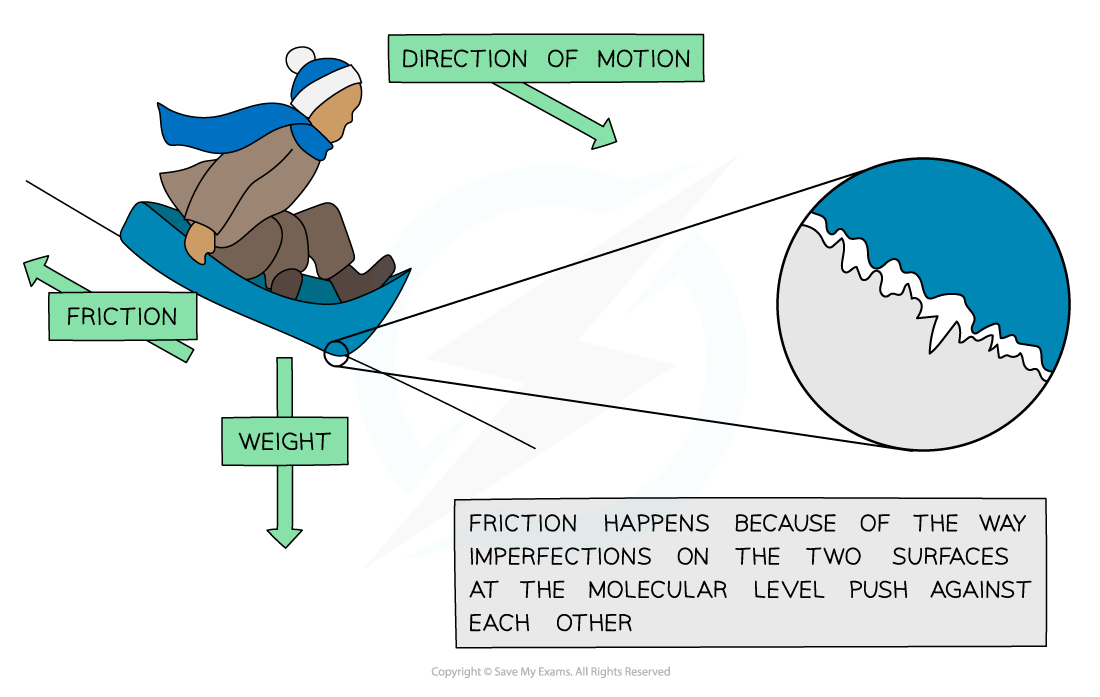
The interface between the ground and the sledge is bumpy which is the source of the frictional force
Motion of Objects & Drag
Motion of Objects & Drag
Friction in Fluids
Gases and liquids are known as fluids
Fluids are different to solids because the particles in fluids can move around
Friction acts on objects moving through gases and liquids as the particles collide with the object
This type of friction is called drag
Air resistance is a type of friction that slows the motion of an object
Particles bump into the object as it moves through the air
As a result, the object heats up due to the work done against the frictional forces
Air Resistance Acting on Return Module
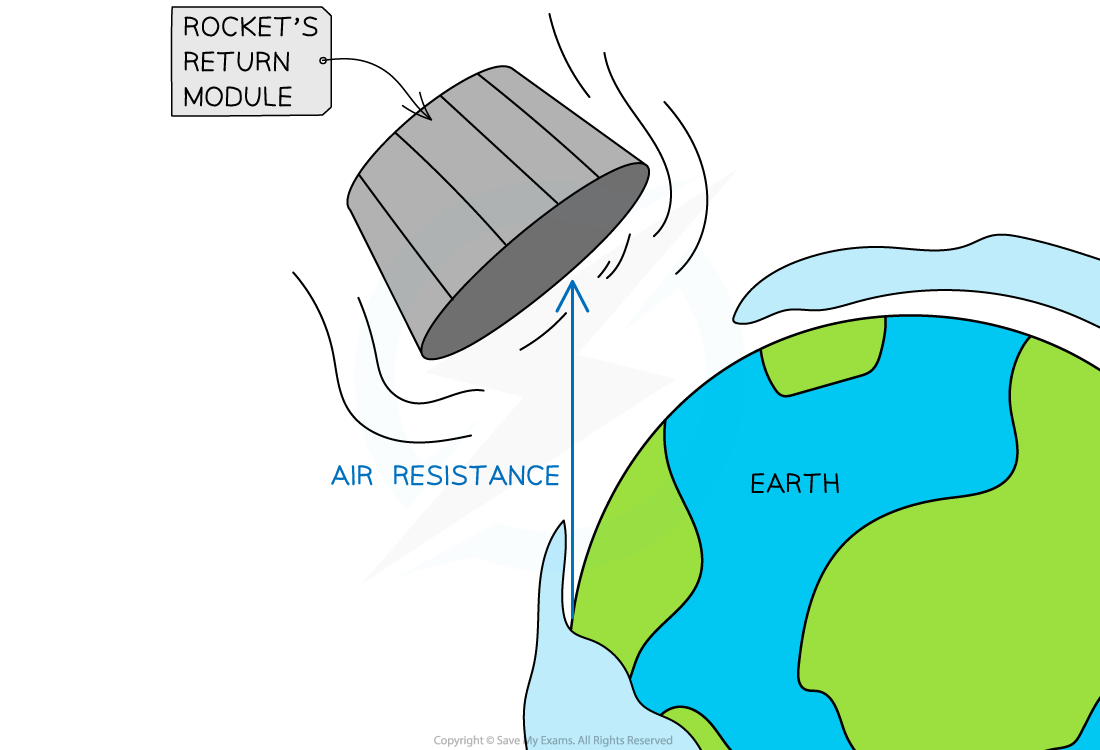
The return module of a rocket heats up due to the work done by air resistance as it travels a distance through the atmosphere