Energy from Fuels
Fossil Fuelsvideo
Fossil Fuels
Fossil fuels are:
Coal
Natural gas (mostly methane) which is used in domestic boilers and cookers
Crude oil which is refined into petrol, diesel, and other fuels
Three Main Fossil Fuels
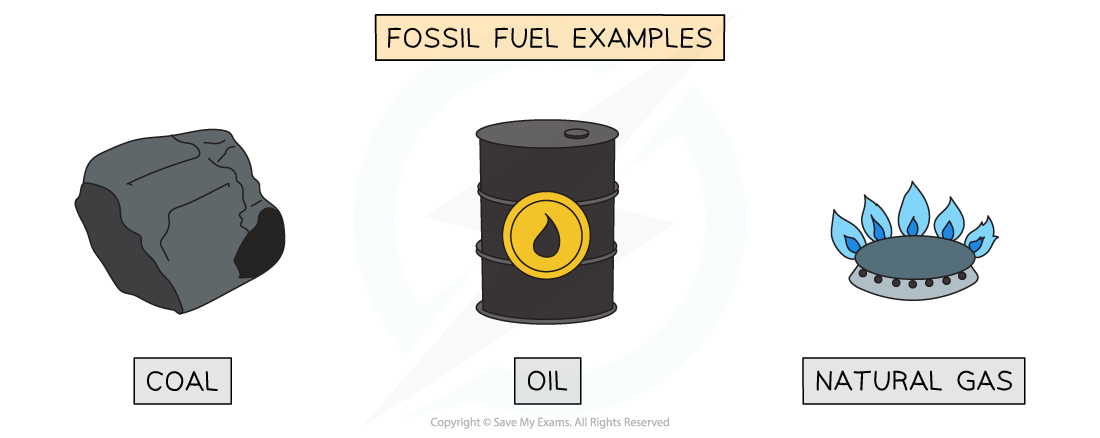
Fossil fuels: coal, oil and natural gas
Fossil fuels are formed from the remains of plants and animals
Chemical energy stored in fossil fuels originally came from sunlight
Energy from the sun was transferred to the chemical energy store of plants by photosynthesis (plants use energy from sunlight to make food)
Animals ate the plants and the energy was transferred to their chemical store
Advantages
The current systems of transport and electricity generation rely heavily on fossil fuels which are generally readily available on a daily basis
In the past fossil fuels have been reliable for large scale energy production although this is changing as supplies deplete and prices rise
Disadvantages
It takes millions of years for fossil fuels to form
This is why they are considered to be a non-renewable energy resource
The increasing demand for a decreasing supply causes prices to increase
Fossil fuels are predicted to completely run out within the next 200 years
Burning fossil fuels pollutes the atmosphere with harmful gases such as:
Carbon dioxide which contributes to the greenhouse effect
Sulphur dioxide which produces acid rain
Both carbon and sulphur can be captured upon burning preventing it from being released into the atmosphere but this is expensive to do
Uses of Fossil Fuels
Fossil fuels are used for:
Transport
Generating electricity
Heating
Transport
The majority of vehicles in the world are powered by petroleum products such as petrol, diesel and kerosene
These resources all originate from crude oil, which is a fossil fuel
A growing number of vehicles are now being powered by electricity
The advantage of this is that while the vehicle is being driven, it produces zero carbon emissions
The disadvantage is that when the vehicle is being charged, it is connected to the National Grid, which currently uses a combination of renewable and non-renewable energy sources
Electricity Generation
Fossil fuels, such as coal and oil, are used to produce energy on-demand when energy is needed
This is done by burning the materials when the energy is required
When coal is burned, energy is released from its chemical store
This is used to boil water creating steam
Steam is forced around the system and this turns a turbine
The turbine turns coils in a magnetic field in the generator
This generates electricity
The electricity is transferred through a step-up transformer and is carried out of the system by electrical lines
The steam within the turbine will cool and condense and then be pumped back into the boiler to repeat the process
A coal-fired power station
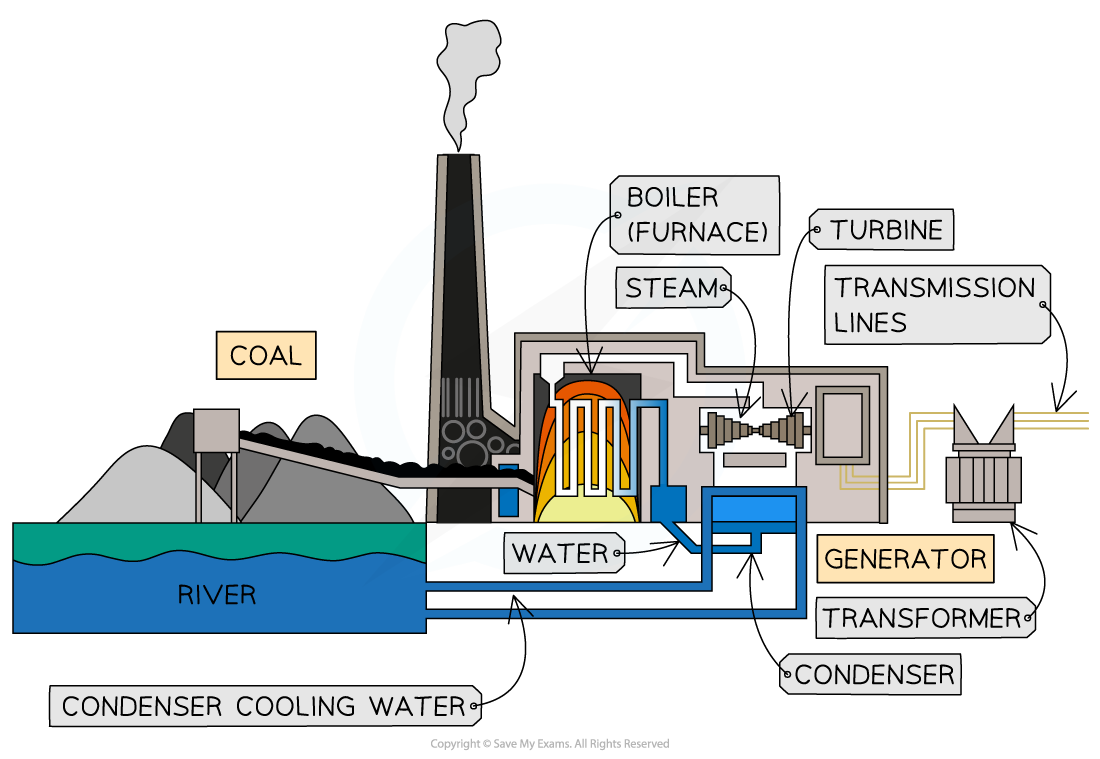
Electricity generation in a coal-fired power station
Electricity plays a bigger role in people's lives than ever before
With almost 8 billion people in the world, this means the demand for electricity is extremely high
To keep up with this demand, a combination of all the energy resources available is needed
On the downside, the majority (84%) of the world's energy is still produced by non-renewable, carbon-emitting sources
This has an enormous negative impact on the environment
Currently, scientists are working hard to develop more and more efficient ways to produce electricity using more carbon-neutral energy resources
Pie chart of global energy consumption
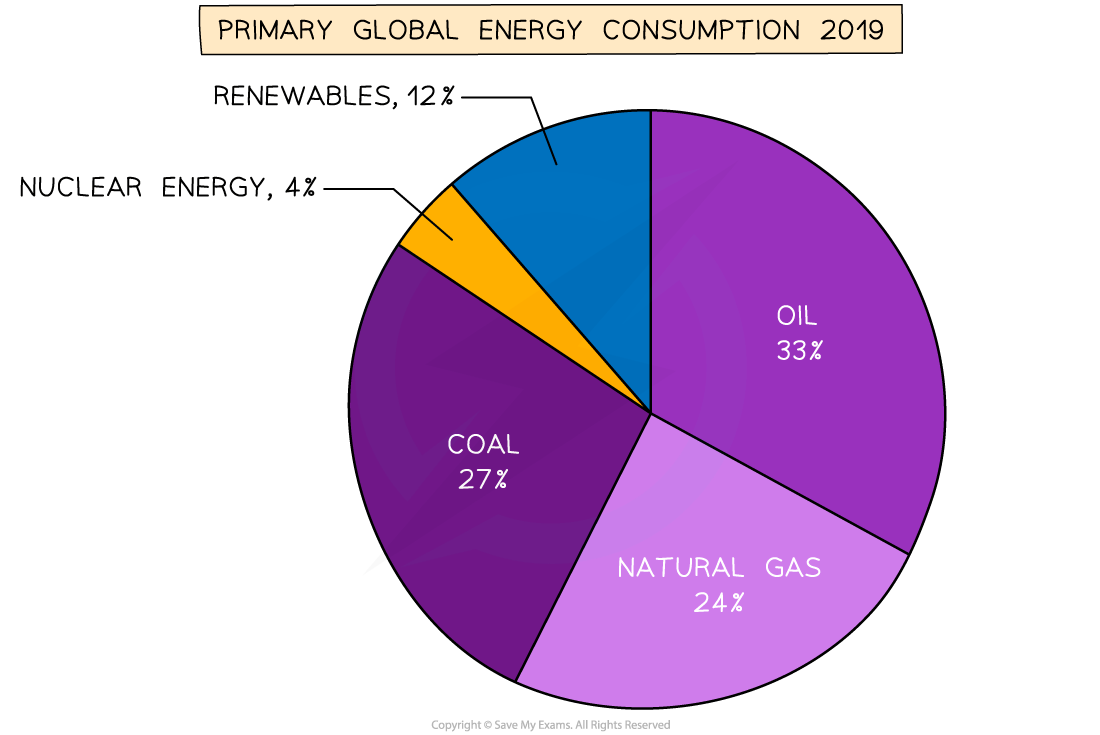
Percentage of renewable and non-renewable energy consumption in 2019
Heating
Most homes in cold countries are fitted with central heating systems
These utilise natural gas in order to heat up water which can be pumped around radiators throughout the home
Bio Fuels
Bio Fuels
Biofuels are made from plant matter
Energy from sunlight is transferred to the chemical store of plants
Ethanol or methane can be produced and used in place of fossil fuels
However, they have only half the energy density of fossil fuels
Advantages
Biofuel is a renewable resource
Some vehicles can be powered by biofuel rather than using fossil fuels
Biofuel is considered to be carbon neutral
No sulphur dioxide is produced
Disadvantages
Crops of biofuel producing plants must be grown which takes time
Growing the crops takes a lot of land, and takes resources needed for food production
Burning biofuels releases carbon dioxide into the atmosphere
It is considered carbon neutral because plants take in carbon dioxide when they photosynthesise
Cycle of Carbon used for Biofuel
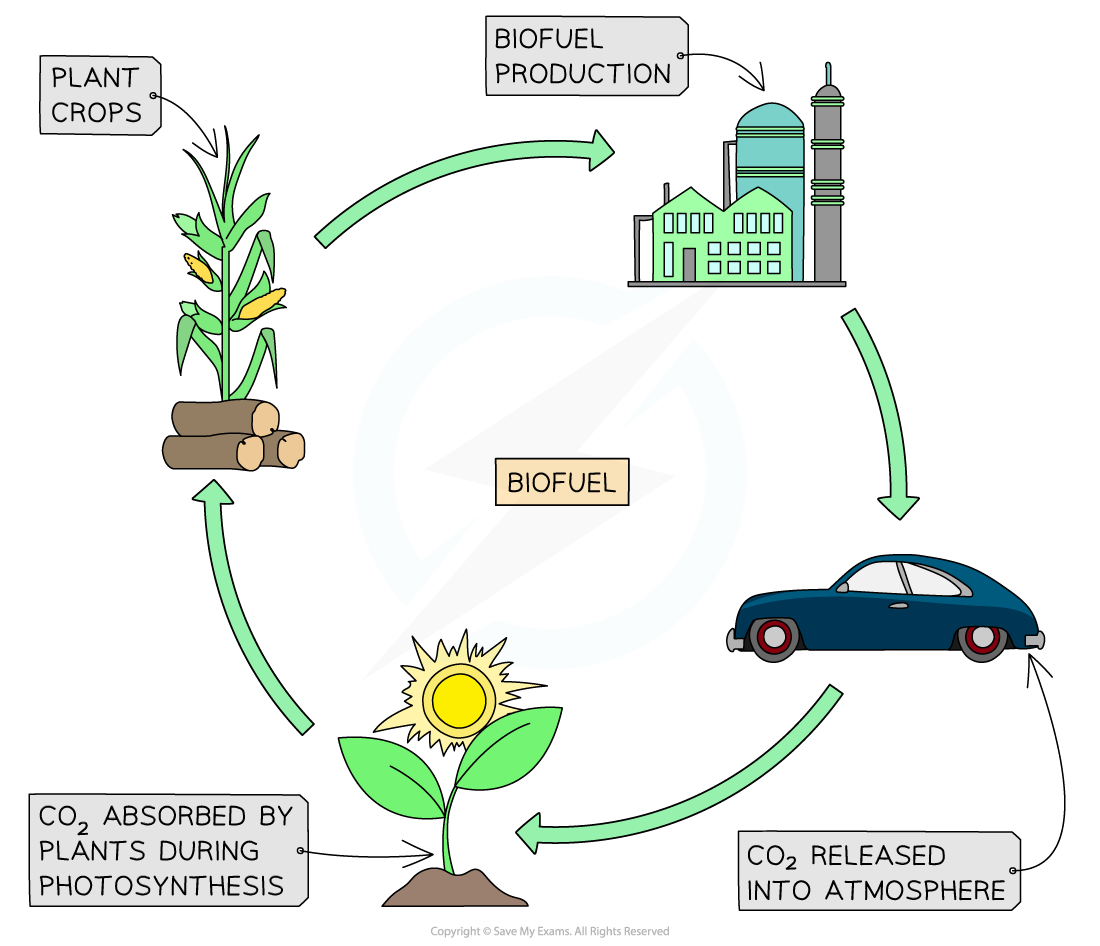
Plants take in carbon dioxide during photosynthesis, but carbon dioxide is released back into the atmosphere when biofuels are burned
Nuclear Fuel
Nuclear Fuel
Energy stored in the nucleus of atoms can be released when the nucleus is broken in two
This is known as nuclear fission
Process of Nuclear Fission
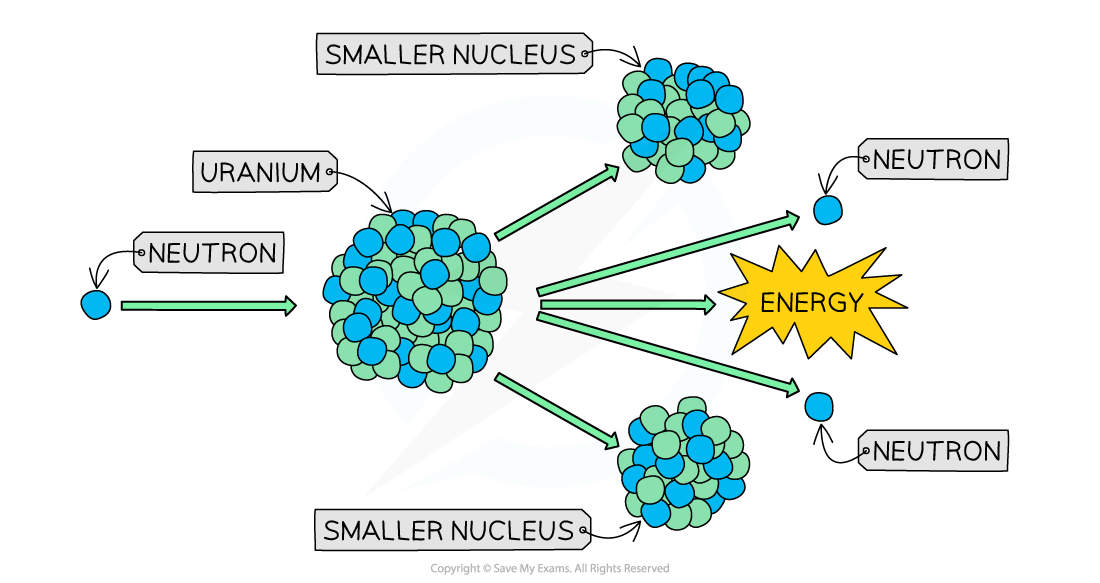
A large nucleus is broken into two smaller nuclei energy is released
Nuclear power stations use fission reactions to heat water, to turn turbines to generate electricity
Advantages
No pollution released into atmosphere
Nuclear reactors are perfectly safe as long as they are functioning properly
Stringent checks must be routinely carried out and rigorous safety procedures followed
Nuclear power stations can generate electricity reliably on a large scale which is available as needed
There are extensive reserves of fissionable atoms
A large amount of power is produced from a small amount of source
Disadvantages
Uranium ore found in the ground is used for fission reactions and since there is a finite supply
Nuclear power is a non-renewable resource
Nuclear fuels produce radioactive waste
Radioactive waste needs to be stored for thousands of years
Safe ways of storing radioactive waste is expensive
If an accident occurs at a nuclear reactor, radioactive waste can leak out and spread over large areas and cause serious, long term damage to people and objects